





Editor's Note: This paper was written before the news broke about the killing of Iranian Supreme Leader Ali Khamenei, which the paper anticipated in the context of the United States providing a suitable environment for presenting an alternative to the regime.
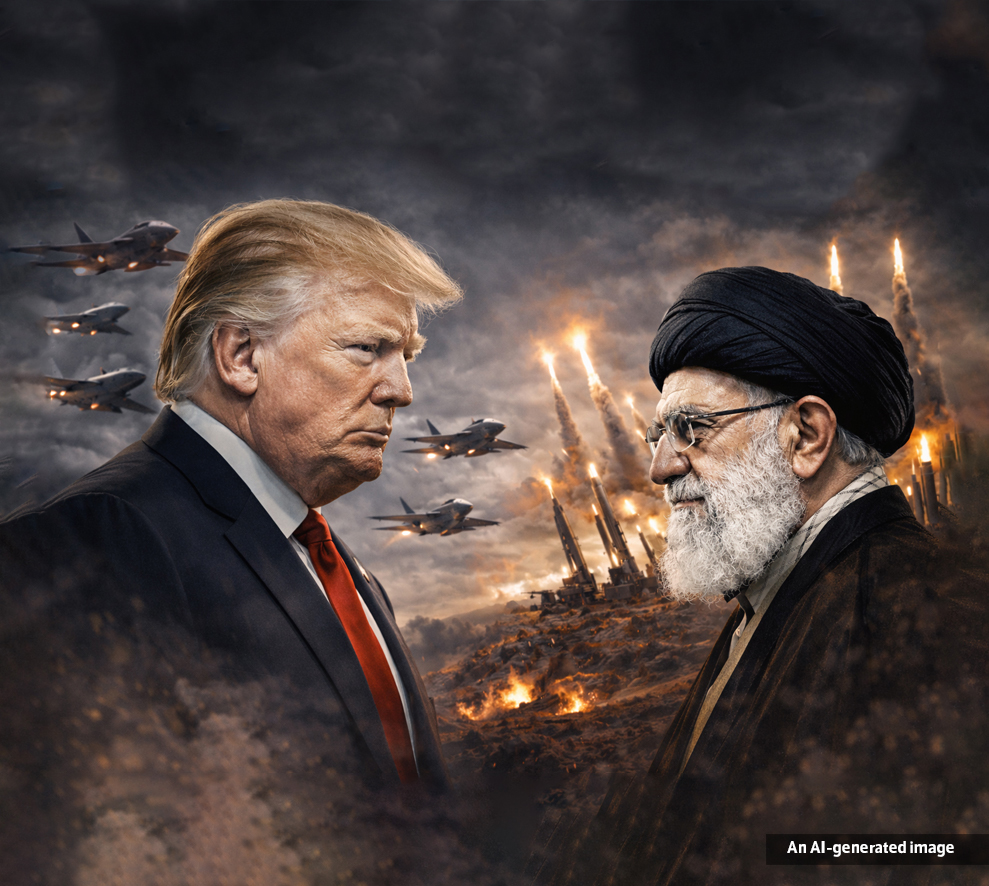
The Israeli- U.S. military operations against the Iranian capabilities have entered their third trajectory. On the morning of February 28, 2026, the two countries launched a joint military campaign targeting several Iranian military and leadership sites, in an attack expected to mark the beginning of a large-scale air campaign primarily aimed at weakening the Iranian regime, undermining its capabilities, and possibly changing its hardline political and religious approach.
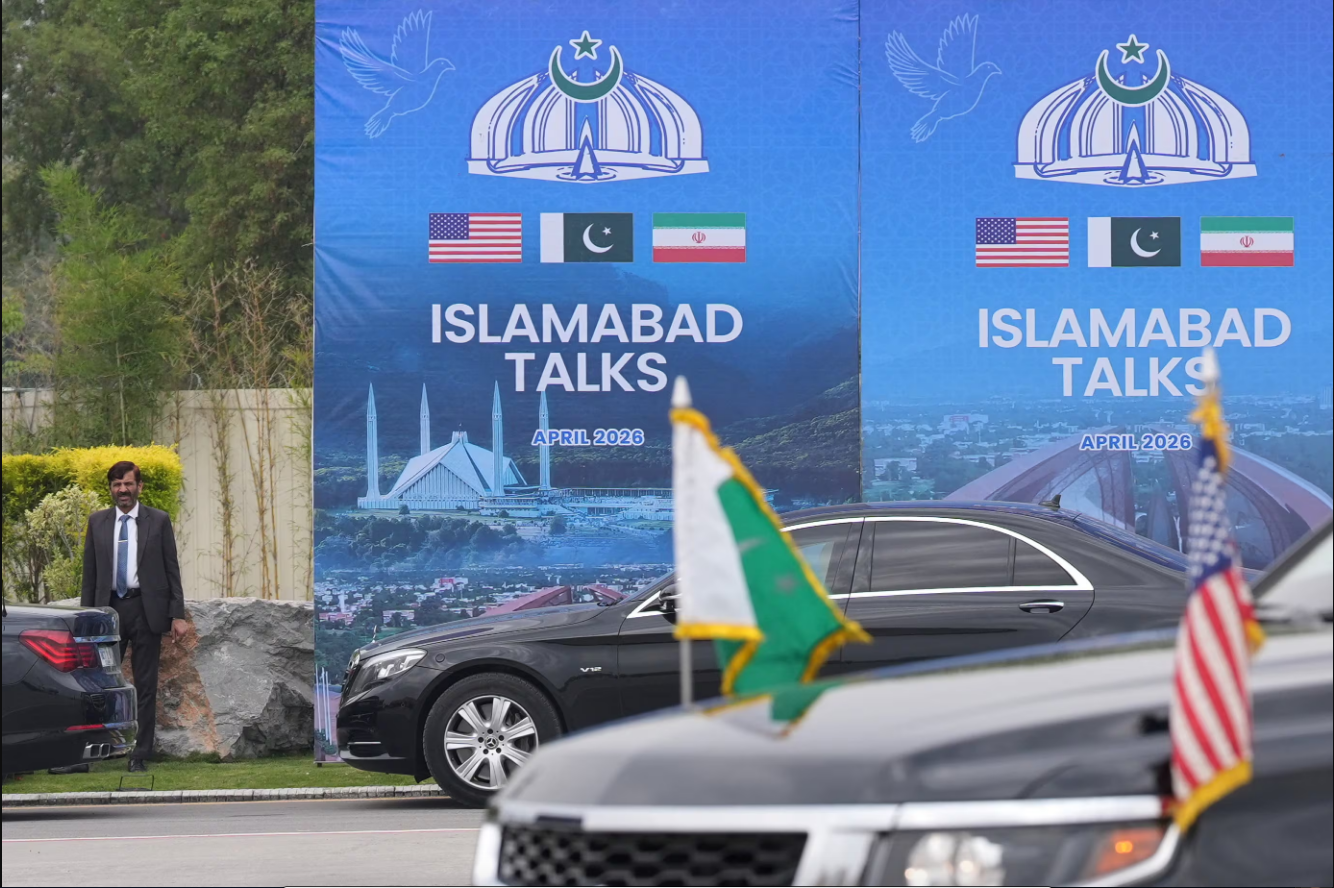
These attacks come after the two countries have held two rounds of “semi-direct” negotiations. The first was held in Oman on February 6, and the second was in Switzerland on February 26 with Omani participation. In fact, the joint military operations against Iran raise several questions regarding their duration, scope, final objective, and post-operation phase. This places the Middle East and the World before a set of open and hard-to-predict scenarios, as the policy of U.S. President Donald Trump is characterized by unpredictability and strategic ambiguity.
Indicators of Joint and Synchronized Operations
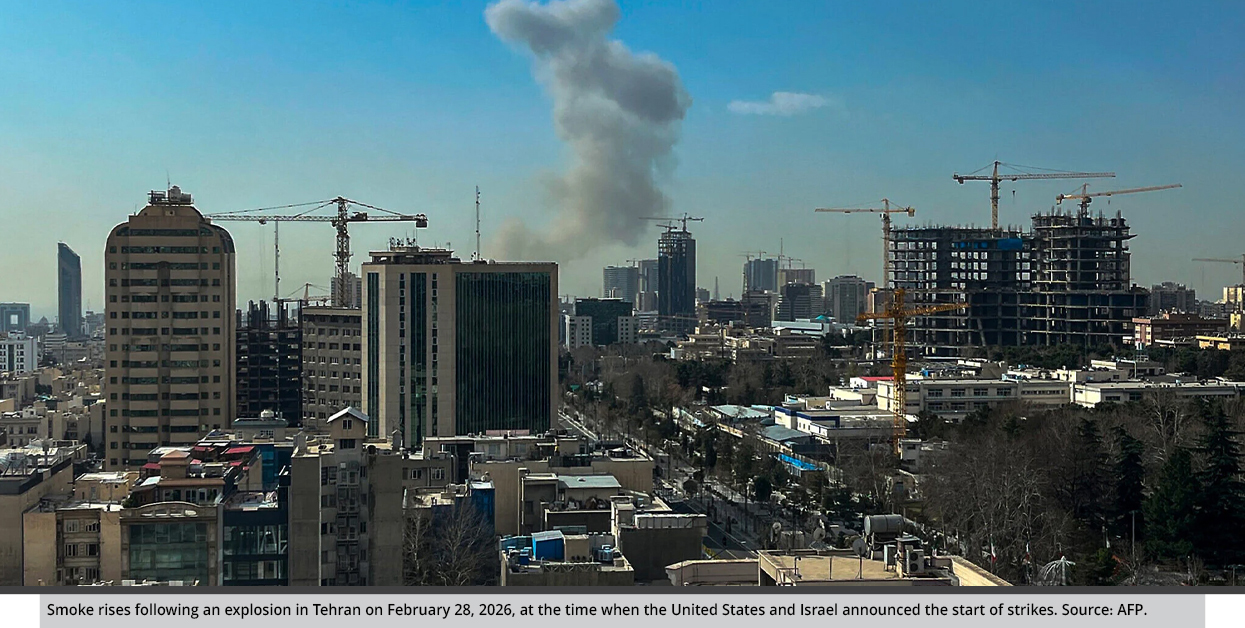
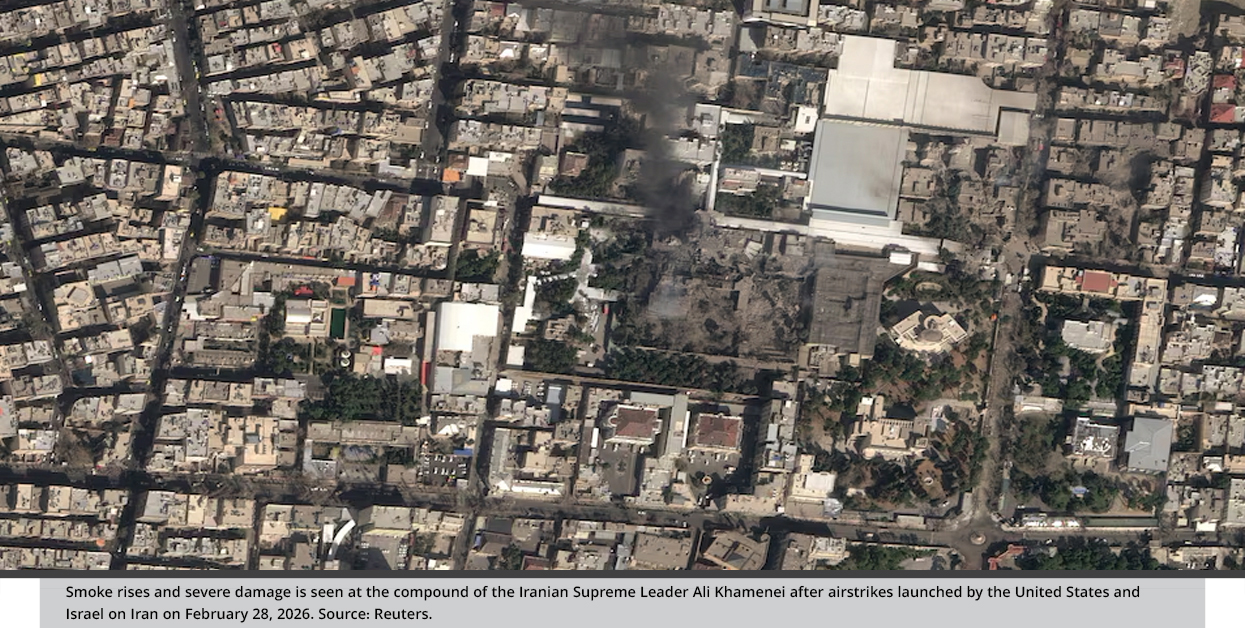
Iran is facing joint and synchronized U.S.–Israeli military, cyber, and intelligence attacks, characterized by multiple levels of complexity and strategic depth. According to officials from both countries, the strikes targeted several Iranian cities, including the capital Tehran, Isfahan, and Qom. The initial waves of the operation targeted military bases, air defense systems, and prominent political and military figures, in addition to the headquarters of Iran’s Supreme Leader, Ali Khamenei. In response, Tehran launched retaliatory strikes using ballistic missiles and drones, targeting Israel and what it claims to be the U.S. interests in the Gulf states.
Practically, The Israeli- U.S. joint military operation against Iranian targets is still in its early stages. Nevertheless, this operation comes in close integration with the development trajectory following the war in the Gaza Strip, following the first direct exchange of attacks between Iran and Israel in April 2024, and the further escalation in October in the same year.
The confrontation was expanded on June 13, 2025, when Israel launched a military operation against Iranian capabilities, culminating in the United States execution of “Operation Midnight Hammer” on June 22, 2025, targeting three Iranian nuclear facilities: Fordow, Natanz, and Isfahan.
In fact, the joint military operation comes after the United States reinforced five main levels over the recent weeks, reflected in the following indicators:
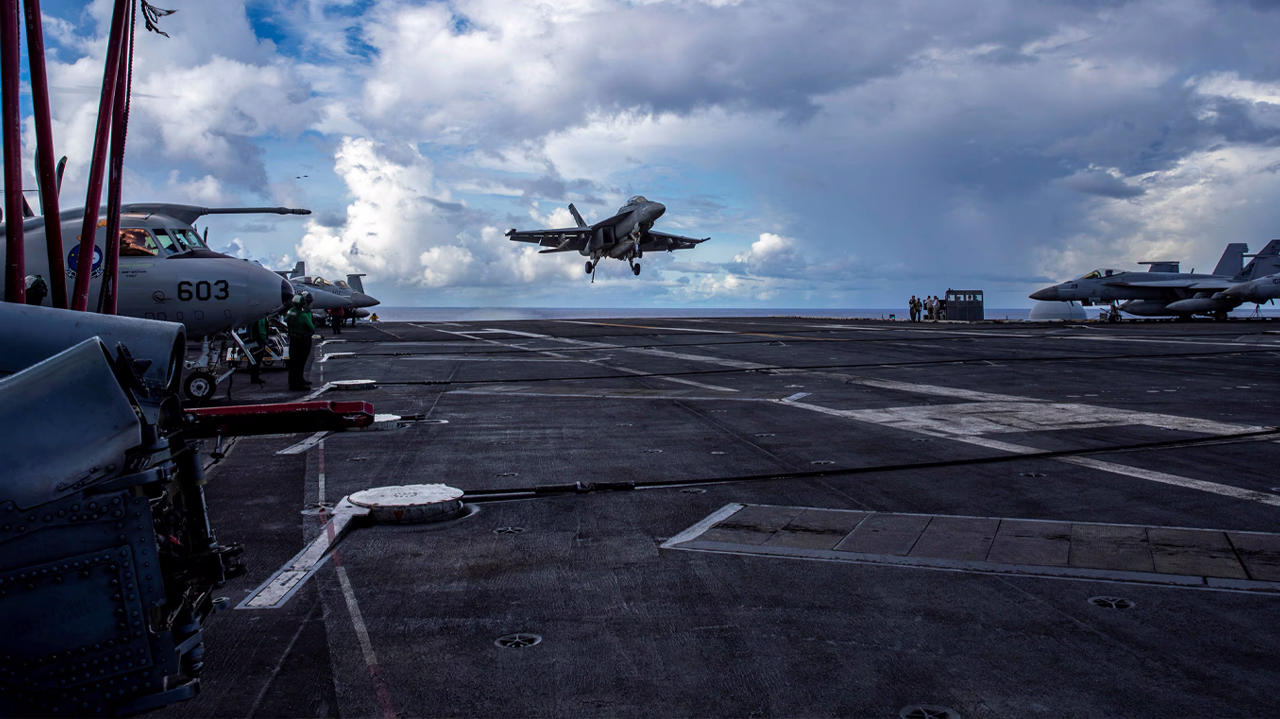
The First Indicator: military and operational field preparation. In the past few weeks, the United States reinforced it boarder military presence for both offensive and defensive purposes – in the largest military buildup since the Iraq war in 2003. This has included the deployment of air defense systems, aerial refueling aircraft, and additional military aircraft across several of its regional bases. Moreover, Washington has deployed two carrier strike groups: USS Abraham Lincoln and USS Theodore Roosevelt, along with USS Gerald R. Ford, in the eastern Mediterranean.
Second Indicator: securing “operational legitimacy.” From the American perspective, the second negotiation framework launched in 2026 has failed. Through this framework, Washington sought substantial Iranian concessions in its nuclear and ballistic programs, based on the operational and Field outcomes following the developments of the war in the Gaza Strip. Tehran, however, insisted on negotiating according to a model based on reciprocal proposals and the gradual narrowing of differences between the two sides, an approach that is inherently long-term and which the United States has explicitly and firmly rejected.
Third Indicator: A broad domestic American consensus has emerged regarding the Iranian regime, especially as recent U.S. rhetoric increasingly links the Iranian threat to American regional interests and even to the U.S. homeland itself. Recent assessments have suggested that Iran is approaching the capability to develop missiles capable of reaching the United States.
Fourth Indicator: It is assumed that the United States did not initiate the ongoing operation without a clear vision of the “day after”. Part of this vision may involve facilitating the rise of one political current at the expense of another in Iran. Several indicators of this have emerged in the last few days, including managing the negotiations with the United States with two distinct currents.
The first, represented by President Masoud Pezeshkian and Foreign Minister Abbas Araghchi, has adapted moderate rhetoric strategy and warning form the repercussions of the continuation of the current state of attrition.
The second, associated with Supreme Leader Ali Khamenei and Ali Larijani, sought to stick with the narrative of Iranian strength. This was further reinforced by a report in the French newspaper Le Figaro, which indicated that former President Hassan Rouhani and former Foreign Minister Mohammad Javad Zarif attempted, in early January 2026, to maneuver toward distancing the Supreme Leader from direct decision-making. It is also noteworthy that current Foreign Minister Abbas Araghchi maintains close ties with both Rouhani and Zarif, who were instrumental in granting him a direct role in the 2015 nuclear agreement.
Beyond this assumption, it is not clear how the speeches of Trump and Netanyahu, which call for regime change, could be translated without entering a long-term ground campaign to take over the key military security, social, and economic institutions.
Alternatively, this approach may rely on the popular reaction and betting on the domestic mobilization once the regime is weakened, which is an uncertain wager since the absence of any indication that the regime opponents or the protesters in the street are aligned or supportive of the United States or Israel. This needs careful scrutiny before embarking on a military operation that both the United States and Israel can halt at any moment, but its repercussions will still be present on the day after.
Fifth indicator: the decision-making process, which appears to have been agreed upon and finalized during Israeli Prime Minister Benjamin Netanyahu's visit to Washington on February 12.
Iranian Readiness and Frameworks of Response and Escalation
For Iran, it certainly has anticipated such an attack and has worked to reinforce its internal front to the greatest extent possible. This time, Tehran could see the ongoing operation as an existential threat to the religious system and the Shiite state. This prescription would necessitate a response higher in both intensity and cost compared to previous cycles of confrontation.
Accordingly, Iran appears to have prepared a number of plans addressing various U.S.-Israeli attack scenarios, alongside the response strategy that it will adapt, as it wagers on the following interconnected and overlapping factors:
First Factor: Iran sought to maximize the lessons learned from the 12-day war in June 2025, as it worked to avoid any leadership vacuum or gaps in military and political positions. In this regard, it worked simultaneously and systematically to establish a layered chain-of-command structure extending to fourth or fifth deputy or alternat for any senior figure likely to be targeted for assassination.
Second Factor: Iran is determined to the greatest extent possible to preserve both the life and the central role of the Supreme Leader. In the worst-case scenario, protecting him would guarantee the continuity of the leadership in the post-war phase, in a manner similar to his role after the 1979 revolution.
Moreover, the survival of the supreme leader would block any political or military coup attempt and strip it of its legitimacy. Even if such an attempt came from within the current political system that is linked to the reformist currents. In contrast, the United States and Israel seem intent on isolating the supreme leader from the operational context and creating security constraints and challenges that would limit his direct oversight of ongoing operations. Also, They may attempt to assassinate him as a main option to create a more suitable environment for successors.
Third Factor: Through its initial response, Iran is seeking to pressure Washington by exploiting the conflicting interests of its allies—namely, Israel and the Gulf states. Especially that Iran has moved from targeting infrastructure to striking civilian sites, as reflected in the drone incident over the Kuwait International Airport, and reports of missile impacts in Manama and Doha, among other Gulf capitals and cities.
At the same time, Tehran aims to raise the costs of the military operation for both the United States and Israel, by targeting major population centers in Israel and vital U.S. economic interests across the region.
In addition, Iran is wagering on saturating the whole region with missile and drone attacks, intending to exhaust the U.S. air defense systems deployed across multiple bases. Especially in light of the reports indicating that these systems are facing shortages in strategic stocks, depleted by both the war that started on October 7 and earlier commitments in Ukraine. Indeed, Iran has already announced targeting 14 U.S. military bases in the region, which reflects the intensity of the attacks on the first day of the war.
Conversely, the United States and Israel will likely work to achieve superiority and operational freedom in the Iranian airspace, particularly Washington, which possesses the capability to maintain a sustained aerial presence over Iran through its extensive fleet of aerial refueling aircraft. This capacity will enable preemptive strikes against missile launch platforms before they launch.
At the same time, the Iranian missile stock—especially its hypersonic arsenal— may decline rapidly, potentially leading to a reduction in launch pace in the coming days.
On the other hand, Iran currently operates according to pre-prepared plans, but as the operational environment is continuously evolving and growing more complex, and in light of the ongoing targeting of the Iranian leaders. This may complicate the Iranian response, shifting it from a calculated strategy to a reactive or unstructured course of action.
Moreover, Iran’s targeting of the Gulf states and Jordan, and the inclusion of civilian infrastructure in these countries among the targets of drones and missiles, could lead to a shift in the position of Arab and regional states. Previously, many of these states opposed any U.S.-Israeli military operation against Iran and rejected the use of their territories as launch pads for such attacks.
However, direct targeting may push the Gulf states and Jordan to be part of a diplomatic and media campaign that calls for undermining the Iranian capabilities, now viewed as a direct threat to their security and safety. This could deprive Iran of the regional multilateral pressure to end the war.
Fourth Factor: Iran realizes the sensitivity and fragility of its surrounding environment, in countries like Pakistan and Afghanistan, which have witnessed ongoing clashes in recent days, along with the political and economic burdens in Iraq. A prolonged war could trigger waves of immigration and displacement toward neighboring countries, which already face challenges. Such pressures could intensify in light of the chaos and unrest in Iran, thereby amplifying the regional repercussions of U.S.–Israeli military operations and increasing their overall cost in one of the world’s most sensitive geopolitical regions.
The War from an American and Israeli Perspective
American and Israeli officials view Iran as an organized state, one capable of replacing its leader in a systematic way. However, replacing a president who died in a helicopter crash is by no means comparable to the removal of most senior officials, let alone the elimination of the Supreme Leader during wartime. Accordingly, no conclusions should be drawn from the incident of the former Iranian President Ebrahim Raisi, as everything depends on the Iranian people and their behavior.
As for the missile issue, American and Israeli officials think that the number, impact, and destructive capacity of Iran’s missiles are lower than what Tehran claims. While it’s true that these missiles can be launched—in the context of a regional war— towards every American base in the region and towards Israel, but the intercepting technology is superior, as these missiles are incapable of inflicting decisive or large-scale damage.
As for the negotiation track between the United States and Iran, it had been faltering since the beginning because the U.S. demands—coordinated with Israel— were far from what the Iranians agreed to offer. Accordingly, Netanyahu convinced Trump that only war could narrow the gaps and possibly change the regime. Therefore, the focus was shifted to the big gaps rather than what Iran could offer. The upcoming technical meeting could serve as a deception on one hand, and on the other, as a chance to resume the talks under intense pressure, similar to the approach adopted with Hamas in Gaza.
It cannot be ignored that this war is regional, but it is far from being a full-scale, comprehensive one. Iranian capabilities do not match those of the United States and Israel, except that it has the ability to launch missile.
Some view that the main issue would be reflected in two central questions, and the answer to these questions will affect the one that preoccupies the U.S. President and regional leaders, which is: we had a good start, but how will things end?
The most important issues are:
- The effect of the war on oil prices and the global economy in general
- The behavior of the Iranian public and the prospect of regime change, as there is a perspective that the Iranian regime won't collapse easily, despite the assassination of its leaders.
The continuation of the joint operation would likely inflict damage to Western economies, especially that of the United States. Under such circumstances, a preferred scenario would be for Washington to end the operation in a week or perhaps slightly longer. Until then, concerns in Israel about deeper entanglement in operations are unlikely to subside.
Contexts and Objectives of the Joint Military Operation
It cannot be said that the context of the joint military operation is unclear or undeclared. Rather, this operation comes in light of two highly connected and intertwined contexts, which are:
First Context: Conceptually, this operation is viewed as a continuation of the war against the “Unification of the arenas” strategy that Israel started to implement after the Hamas attacks against bases and settlements in the Gaza envelope on October 7, 2023. This means that the path of military operations against Iran since June 2025 aims to bring about a racial change that results in eliminating the risks and threats associated with Iran—whether those linked to the regime itself or to its capacity to continue supporting and reorganizing its regional proxies.
This puts the objectives of the ongoing operation in the same pattern as the military operations in both the Gaza Strip and Lebanon, where strikes continue with the aim of dismantling the capabilities of Hamas and Hezbollah, including targeting their military assets and senior leadership.
On the other hand, it is evident that both American and Israeli sides are aware that the final elimination of Iran’s proxy in the Gaza Strip, Lebanon, Yamen and Iraq is not possible without delivering a decisive blow to the Iranian regime that sustains them. Such a move would not only sever the military and ideological supply lines to these actors, but it would also give them space to evaluate their position and offer concessions without the Iranian pressures that constrained them so far.
Indicators of this are evident in the linkages between the current targeting of Iran and “the Unification of arenas”, and the simultaneous attacks on Hezbollah in Lebanon and Popular Mobilization Forces in Iraq, where the strikes reportedly targeted key leadership figures in the Iraqi capital, Baghdad.
Second Context: From an operational standpoint, the campaign is considered a continuation of the military trajectory that Israel started in June 2025 with “Operation Rising Leon”, which targeted Iranian military leaders, nuclear scientists, and the offensive and defensive capabilities. The operation concluded after 13 days, when the United States carried out strikes that—according to American statements—undermined or may ended the Iranian nuclear program. This trajectory indicates that the ongoing attacks may not be limited to a specific type of targets, but come within a broader framework that aims at the systematic and comprehensive destruction of Iranian both offensive and defensive military capabilities, particularly its missile, ballistic, and naval assets.
This approach would entail weakening the regime and creating a strategic vacuum through the assassination of its senior leaders and key ideologues, potentially undermining the regime's ability to survive, especially amid the protest movement that has persisted in Iran since late 2025.
Joint Military Operation Scenarios
The joint military operations enter their first day amid widespread questions and a state of ambiguity about their trajectories, objectives, and duration. This places them within a range of possible scenarios as follows:
First Scenario: A Time-Limited Military Operation
The ongoing military operation may last for days or a few weeks. In light of this scenario, a time-limited operation entails that it is narrow in scope, with its objectives revolve around one of these points:
First: undermining the Iranian regime’s capabilities, especially its long-range missile arsenal, preventing it from exercising any deterrence or carrying out any response. Although Iran was active during the first day in carrying out counterattacks targeting many countries in the region, its ability and activity in launching missiles and drones are expected to decline gradually in the coming days. This could be paired with a shift toward targeting geographically closer objectives, particularly in the Gulf Cooperation Council states, thereby increasing pressure on Washington as its allies are exposed to greater risks.
Second: a gradual military operation, in which each round will last for a day or two, followed by pauses for reassessment and battle damage evaluation. According to an American official to CNN, the operation could witness escalation and de-escalation phases, as the purpose of this model is to synchronize the military action with the negotiation track.
Especially after the Omani Foreign Minister, Badr Albusaidi, issued statements, before the operation, suggesting that there are acceptable prospects for reaching an agreement. He seems to try to inform the international community and the Gulf Cooperation Council states that the negotiations were ongoing, and that any military action would be inconsistent with that diplomatic path.
Today, in a post on X, he wrote, “I am dismayed. Active and serious negotiations have yet again been undermined”, recalling the previous Israel attack on Iran when the negotiations were ongoing between Tehran and Washington in the Omani capital Muscat. He added that “Neither the interests of the United States nor the cause of global peace are well served by this”.
Second Scenario: An Open-Ended Operation with Defined Objectives
The entry of the United States and Israel into a large-scale military operation with defined objectives could imply the expansion of these objectives beyond the mere undermining of specific military assets, such as missile capabilities. As it may evolve into a prolonged operation aimed at changing the regime and creating a strategic political and security vacuum in the governance structure led by the Supreme Leader and the Islamic Revolutionary Guard Corps (IRGC).
Such a trajectory suggests that military intervention could be continuous or intermittent, comprehensive or selective in nature.
Nevertheless, the emergence of any vacuum within the ruling system remains uncertain, as the Iranian constitution outlines procedures designed to prevent sovereign or leadership voids, and the country has adopted preemptive measures by designating fourth- and fifth-tier deputies for senior officials. This indicates the difficulty of leaving any position unfilled, and in particular terms, reducing the likelihood of any internal coup or revolution capable of dismantling the regime both constitutionally and structurally.
Scenario Three: A Broad but Specific Multi-Objective Campaign
The ongoing operation is likely to be multi-phase, operating across multiple levels and pursuing distinct objectives, as it aims at undermining the Iranian capabilities. The operation may extend to successive military actions aimed at ending the influence and capabilities of Iran’s proxy, including the Iraqi armed factions, Hezbollah, and maybe Houthis in Yemen.
The statement of the U.S. Senate Democratic Majority Leader Chuck Schumer, following a White House briefing to congressional leaders, highlighted the seriousness of the situation and the need for transparency with the American public. Such statements may indicate that the current military operations could be prolonged and carry potentially high costs.
Scenario Four: Operational Stalemate and the Onset of a Zero-Sum War
It is possible that the operation does not lead to any radical change within Iran, whether in terms of changing the regime or its approach, or prompt it to make concessions in the negotiations. In this case, both the United States and Israel would risk creating an environment in which Iran emerges as weak and vulnerable but dangerous in the same time. Escalation—or forceful retaliation against any perceived internal or external threat—could become a recurring feature of Iranian strategy. This dynamic may ultimately prove counterproductive, reinforcing hardline factions that would hasten to frame the situation as a strategic victory in the war.
Keep in touch
In-depth analyses delivered weekly.