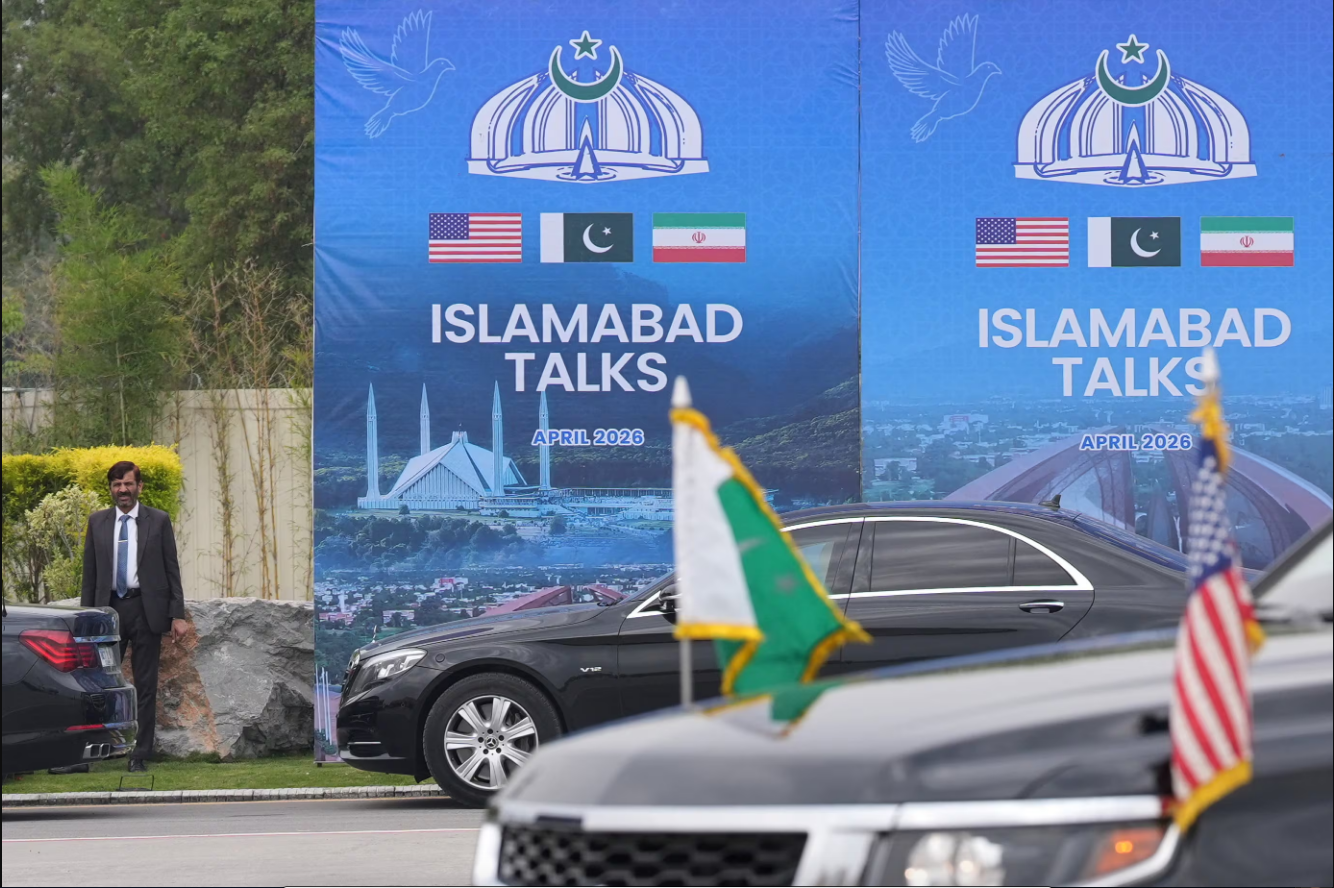






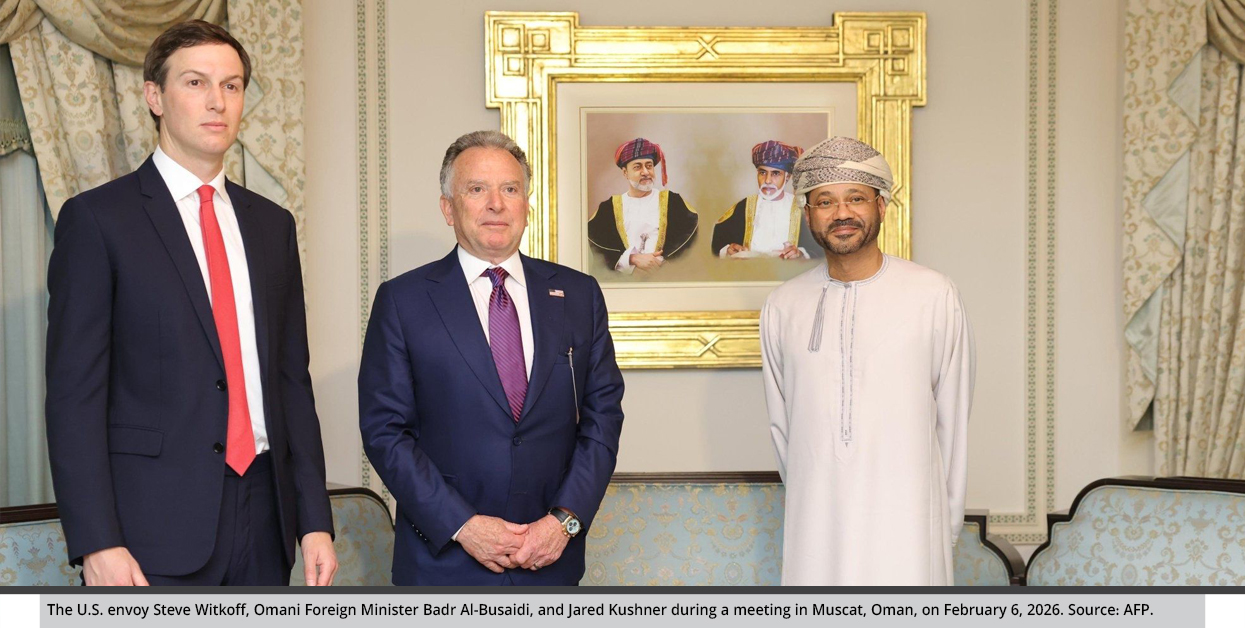
The first round of “semi-direct” talks between the United States and Iran was held in the Sultanate of Oman on February 6, 2026. This followed both parties’ agreement to certain concessions to facilitate a return to the negotiating table: Washington accepted Iran’s proposal to shift the venue of the talks from Turkey to Oman, while reports indicate that Iran made concessions regarding the scope of the negotiations.
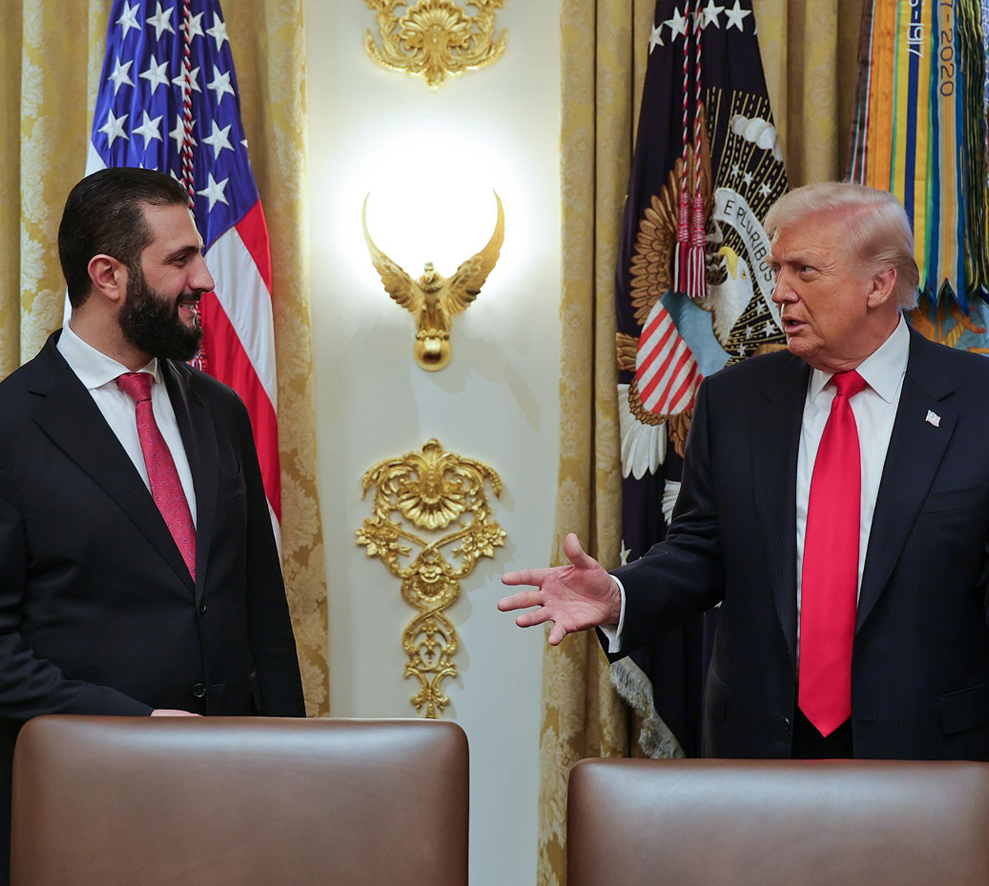
The positions of both sides at the conclusion of the first round were marked by positivity. U.S. President Donald Trump described the talks as “very good,” while Iran’s Foreign Minister Abbas Araghchi characterized them as “a good start.” Nevertheless, this round represents only an initial step in a complex and intertwined process that has historically faced numerous obstacles and challenges—now compounded by a range of multi-level regional and domestic Iranian developments, as well as factors related to Trump’s approach.
The First Round: Between War and Agreement Options
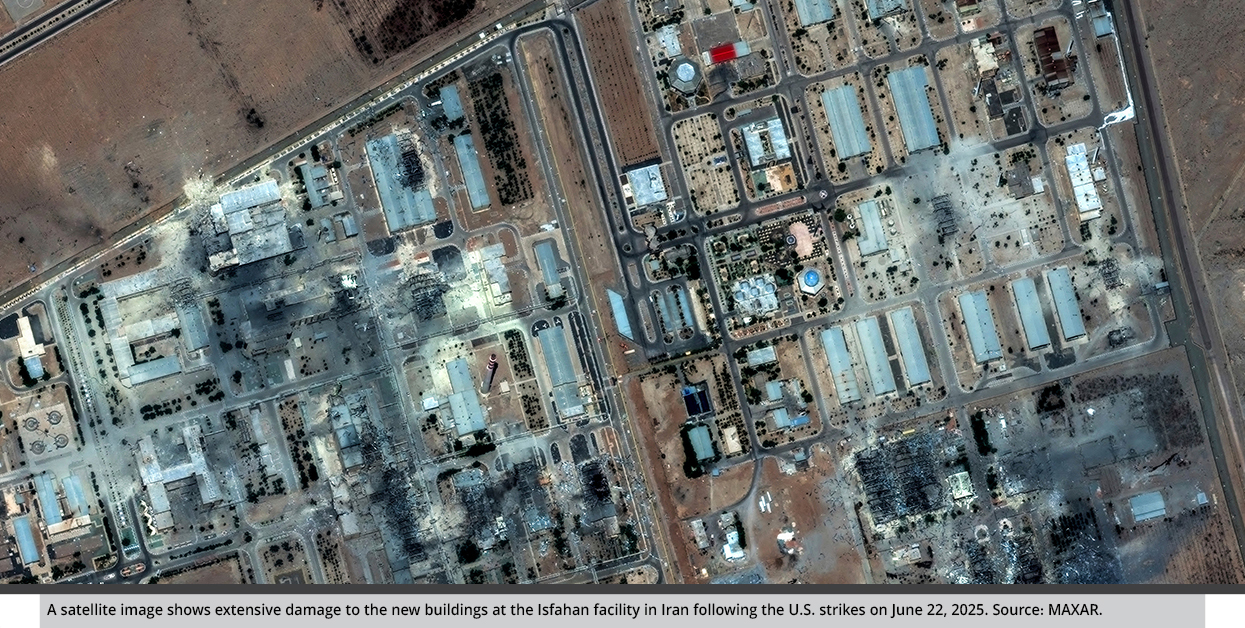
The first round of negotiations between the United States and Iran constitutes the second of its kind, following the failure of the two countries to complete the initial negotiating framework of the “semi-direct” talks hosted by the Sultanate of Oman on April 12, 2025. That track collapsed two days before the second round was due to convene, when the United States carried out “Operation Midnight Hammer” on June 22, 2025, targeting Iran’s main nuclear facilities in Natanz, Isfahan, and Fordow.
The United States enters this second negotiating framework, backed by the outcomes of its strikes against the nuclear facilities, and in light of the new wave of protests unfolding in Iran. Compared to the first negotiating framework, Washington has sought to broaden the scope of the talks, moving—according to U.S. statements—toward addressing a wider package of interrelated issues. These include Iran’s missile and ballistic program, as well as its support for regional proxies—issues that Tehran continues to insist are not subject to negotiation.
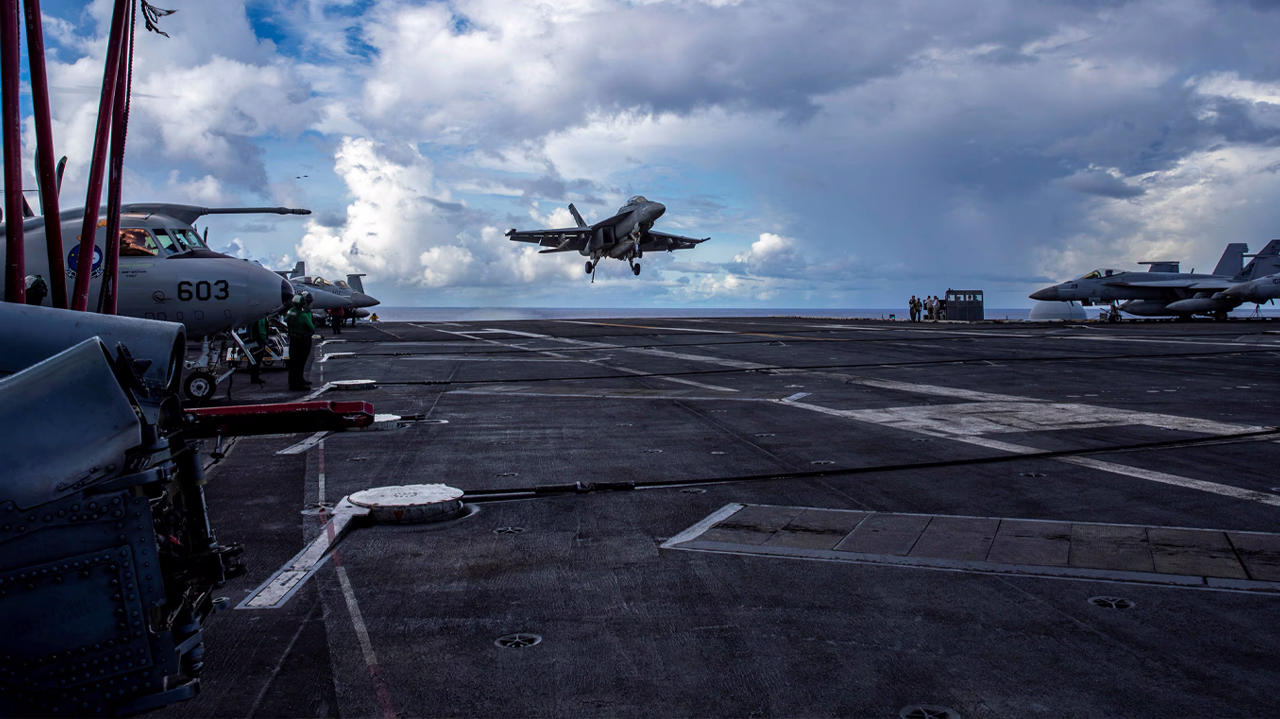
For years, Iran refused to include issues beyond the nuclear program in its negotiations with the United States. However, current indicators point to greater flexibility in Tehran regarding the expansion of the negotiation agenda. It can be assumed that this flexibility is linked to the military threats repeatedly signaled by Trump, who has, on nearly every occasion, raised the possibility of striking Iran—particularly given that he is backed by a sufficient military buildup capable of carrying out both offensive and defensive operations.
Recent developments have demonstrated the credibility of the American threat—whether in “Operation Midnight Hammer” or in the arrest of Venezuelan President Nicolás Maduro on January 3, 2026, following a complex and large-scale military operation carried out in the capital, Caracas. That operation was preceded by the largest U.S. military buildup off Venezuela’s coast since the 1989 United States invasion of Panama.
From Washington’s perspective, its military deployments in the Middle East reinforce the ongoing negotiating framework; as Henry Kissinger famously argued that diplomacy is more effective when backed by power. For Iran, however, the U.S. military threat represents a serious option, prompting Tehran to signal that it clearly understands the message. What Iran fears most is no longer limited to strikes against its nuclear program—since such strikes have already occurred—but rather the prospect of unconventional methods that could lead to regime change, alter its governing approach, or gradually undermine it to the point where its replacement becomes only a matter of time.
For the first time in decades, American rhetoric advocating regime change has become more consistent and aligned with current developments. In the past, such rhetoric faced broad opposition within U.S. public opinion and among American opinion leaders—particularly from Trump and his political movement known as (MAGA), which rejects military interventions abroad. Military interventions have often been associated with the model of prolonged American wars in Iraq and Afghanistan.
However, two key variables have now entered the equation. The first relates to the transformation in the patterns of U.S. military operations, which have increasingly relied on rapid execution and decisive outcomes. These operations are characterized by high levels of operational and technological complexity, combined with diplomatic and intelligence efforts. From this perspective, no one possesses a clear idea of the potential form and nature of any U.S. military move against the Iranian regime—an option that appears to be taking shape day by day, based on the diplomatic trajectories emerging from the Oman rounds, intelligence assessments, and military readiness.
The second variable concerns the broad protests inside Iran and the shifts in the domestic landscape in the post-war phase. In addition, dynamic analyses of the course of military operations against Iran—beginning with Israel’s “Operation Rising Lion” on June 13, 2025, which targeted Iran’s military capabilities, and expanding to the U.S. “Operation Midnight Hammer,” which struck its nuclear capabilities—suggest that the Iranian arena is operationally prepared for a broader operation. Such an operation could aim at regime change or at creating a wide strategic vacuum at the leadership level and across the security, political, and military domains.
The Next Step Options
The options for the next step are primarily linked to developments within the second negotiating framework. Drawing on its surplus of power and prior experience, Washington is demanding that Tehran make substantive concessions across the three pillars of the negotiation agenda.
Beginning with Iran’s support for its proxies—an issue of high importance to the United States and closely tied to resolving other regional files, including the disarmament of what remains of Hezbollah in the post-war context. Iran may offer relative concessions on this front, as several of its proxies are experiencing an unprecedented state of weakness, while others face intense pressure.
With Iran’s loss of the Syrian arena—long regarded as a strategic and logistical cornerstone of its regional project—the gradual erosion of its proxies’ power and influence appears continuous and enduring. The continuation of this erosion would impose political and economic burdens on Tehran. It is therefore logical for Iran to seek an agreement of a strategic significance —one that would not leave room for its proxies to undermine it or jeopardize its gains.
On the other hand, Iran entered the negotiations aware that its current nuclear requirements no longer align with those of the 2015 nuclear agreement. It also recognizes that the U.S. position goes beyond interim arrangements or temporary understandings, instead moving toward the full dismantlement of Iran’s nuclear capabilities—at least within Iranian territory.
This could involve the possibility of maintaining a limited enrichment capacity for peaceful purposes at a level of 3.76%, under expanded international monitoring and perhaps even outside Iran’s borders, in a manner that would prevent Tehran from reconstituting its nuclear program at the threshold of military use. In return, Iran would likely obtain international recognition—particularly from the United States—of its right to benefit from nuclear energy for peaceful purposes.
The expectation that Iran may demonstrate a degree of flexibility in the two aforementioned files is grounded in the reality that both tracks have been decisively affected by the developments and outcomes of the war. However, that same premise renders the missile and ballistic program the principal challenge within the negotiating framework.
During the last war with Israel, it constituted Iran’s primary offensive pillar and its main instrument for deterrence and balance—particularly in light of Israeli and American air superiority. Consequently, the likelihood of Iran offering concessions in this file appears significantly lower.
On the one hand, Israel insists on—and is pressing the United States to ensure—the decisive resolution of Iran’s ballistic missile program within the negotiations. It has signaled the possibility of acting unilaterally to undermine it, having experienced during the war the scale and severity of the missile threat, which it regards as an “existential threat.”
Moreover, Tehran maintains that its ballistic program is designated for defensive purposes and is non-negotiable, particularly as Iran has worked intensively to recover from the damage it sustained during the war and continues to advance its development.
Why Seek an Agreement?
The present moment suggests that the Middle East stands at a critical crossroads, closely tied to developments unfolding in Iran. While Tehran has pursued an expansionist foreign policy over the past decades, which has posed a sustained threat to its neighbors, the broader region, and the United States. The internal turbulence the country now faces, compounded by escalating pressure from intensified U.S. sanctions and the widening scope of protest movements, places the region before a potentially destabilizing scenario.
Such a scenario could involve the collapse of the regime and the country’s descent into a spiral of political and security vacuum—an outcome that both the region and the United States are seeking to avoid.
In reality, the ongoing negotiations represent a primary option for preserving regional stability. Their success would mean the survival of the Iranian regime, but without effective capabilities to conduct non-diplomatic activities beyond its borders. Those activities include particularly its missile program and its support for proxies, the two principal threats that have, for decades, posed challenges to Israel and U.S. interests.
However, the failure of the negotiations would place the United States before a major challenge—namely, its ability to translate its threats of carrying out a military operation against the Iranian regime. Observers and experts largely agree that any limited military strike may fail to achieve its objectives in weakening or undermining the regime.
At the same time, launching a broad military campaign targeting the regime’s capabilities and leadership could drive the country toward chaos—particularly in the absence of ready and viable alternatives to the current regime in Iran.
Accordingly, monitoring the next step requires assessing the trajectory of the ongoing negotiating framework, which Washington is seeking to conclude swiftly, in a manner that denies Iran the opportunity to maneuver for time and ease the pressures imposed upon it. It is also linked to three key indicators:
First: the degree of cohesion within the elite and leadership of the political system, particularly in their positions on domestic and foreign issues.
Second: the scale and breadth of the protest movement, as well as the extent to which its objectives and demands align with visions for a post-regime scenario.
Third: the nature of potential U.S. military action, which is believed to correspond closely with the first two indicators. Such action is unlikely to be conventional—whether in its tools or scope—but rather focused on a number of specific, high-value targets designed to support alternative trajectories that are reportedly already under preparation.
Finally, the option of gradually constricting Iran remains on the table. The regime is currently experiencing one of its most critical phases since the 1979 Revolution, both domestically and externally. The continuation and escalation of present pressures could ultimately lead to the regime’s decline—resembling the slow demise of the Roman Empire, which endured a prolonged period of gradual deterioration before its eventual fall.
Keep in touch
In-depth analyses delivered weekly.

Related Analyses: