
President's Statement
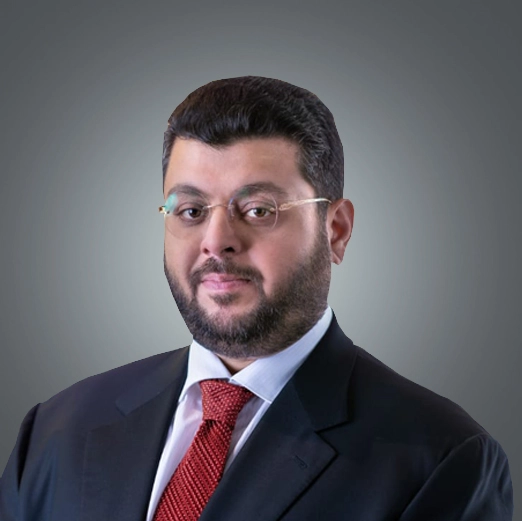
Mr. Hasan Ismaik: Chairman of the Board of Trustees of SPI
The existing international system is undergoing a profound structural and systemic transformation. This change not only reshapes the balance of power and patterns of interaction among actors, but also redefines the very nature of threats and challenges facing societies and nation-states.
In its initial phase, these threats evolved from natural environmental and geographical phenomena, which were beyond human control. They later shifted into the traditional security paradigm, based on conventional warfare and kinetic conflicts between societies or sovereign states.
In recent decades, a shift has occurred away from traditional models—both at the conceptual and operational levels—as threats have emerged from a multidimensional spectrum of tools and means associated with what is known as the “gray zone.” These threats are characterized by ambiguity, overlapping levels, and crossing the boundaries separating peace and war.
Currently, the research literature and strategic studies tend to focus on a number of emerging threats and unconventional challenges. Unlike previous challenges that were centered around states and concentrated in the areas of military or physical conflict as the main decisive factor, contemporary challenges tend to be centered on the humanitarian dimensions, as the main area of the current concept of security.
In this context, modern technologies and applications of artificial intelligence, shifts in patterns of production and knowledge, and the structural repercussions of climate change—and their impact on environmental and social stability—have all come to the fore. This is alongside the fragility of health systems and transnational health threats, as evidenced in the aftermath of the COVID-19 pandemic, as well as the growing challenges associated with global governance.
However, the most profound and consequential threat does not lie in environmental, material, or technological risks; rather, it is embodied in the transformations affecting human beings themselves. The normative and value-based foundations that have long structured human relations are gradually eroding, alongside the decline of collective humanitarian frameworks that prevailed in the late twentieth century. These frameworks are fragmenting with the rise of exclusionary discourses, as societies return to the dynamics of the internal group versus the external group, or strangers.
Within this context, cultural, economic, and intellectual structures are undergoing tangible transformations—from the free flow of ideas and capital toward growing local protectionism, as societies increasingly exhibit tendencies toward isolationism and xenophobia.
The risks do not stem from the phenomenon itself, as it is a recurring pattern in human history, but rather from its impact and its repercussions on the effectiveness of national and UN institutions. Policies are formulated and implemented within rapidly shifting environments, amid unstable decision-making patterns and mechanisms, and in the absence of consistent regional and international norms.
The principal danger lies in the transformation affecting decision-making patterns, which, under the pressures of identity politics and inward retreat, are experiencing distortions and forms of cognitive contraction. Decision-makers have increasingly tended to simplify and fragment highly complex and high-threat variables and problems. In many instances, decisions are made in detachment from reality, as decision-making processes become driven by populist reasoning, perceived discourses, and emotionally driven choices.
This has resulted in reductionist, insular, and self-centered policies, accompanied by a decline in political certainty and strategic path. Policies may undergo complete shifts within a single electoral cycle, or in response to changes in public sentiment or emergency events.
Collective capacity has also witnessed a marked decline. Paradoxically, the erosion of collective tools comes at a time when global challenges are becoming increasingly complex and interconnected. Humanity now faces shared existential risks and overlapping dynamics across health, environmental, economic, and technological dimensions. This occurs in parallel with the waning influence and significance of UN institutions, whose effectiveness in resolving complex crises has diminished, along with their role in coordinating joint international responses to global emergencies.
All of this is part of the symptoms of deep instability arising from the fundamental changes affecting the international system. These developments cannot be considered transient; uncertainty has entered a phase of “strategic ambiguity,” as structural transformations in the international system remain irregular, and human relations lack standardized norms in the post-globalization era.
For decision-makers, investors, and companies, the tools for predicting long-term trends are shrinking. Long-term foresight can no longer rely on historical precedents or the current reality, as we have entered an era full of shocks and non-linear trajectories. Long-term strategic planning for energy projects, infrastructure, or policies and plans spanning twenty years has become extremely challenging.
In this highly complex landscape, research and think tank institutions gain increasing importance, as they are capable of identifying and studying variables, understanding and analyzing transformations, and assessing and evaluating events. They continue to maintain their strategic dimension and practical commitments. Research centers can be among the leading institutions that prevent the strategic collapse of political knowledge. They are among the few entities capable of addressing disruptions and transforming the quantitative and qualitative flows of raw data into actionable information and recommendations.
The Strategic Policy Institute represents a significant development, building on the foundation of STRATEGIECS, which was established in 2018. This evolution has been driven by the credibility, precision, and reliability that the institute has earned. The transition to the Strategic Policy Institute reflects the adoption of modern methodologies and improvements in scenario planning, risk management engineering, and early threat detection. It also contributes to the development of policy frameworks for decision-making processes based on analysis and assessment.