Analyses
Politics
test analyses
Politics
test
Regional Trends
After the Assassination of Khamenei: Scenarios for the Third Supreme Leader
International and Global Trends
Israeli-U.S. Military Operation Scenarios and Iranian Responses
International and Global Trends
Washington and Tehran: Negotiations Under the Hammer of Military Buildup
Filter by:
.jpg-%D8%AB%D9%84%D8%A7%D8%AB%D9%8A%D8%A9-%D8%A7%D9%84%D8%A7%D8%B3%D9%84%D8%A7%D9%85-%D8%A7%D9%84%D8%B3%D9%8A%D8%A7%D8%B3%D9%8A.jpg)
The Trilogy of Political Islam: Sanctification, Politicization, and Failure
“Islam is the solution”, is the slogan of the so-called Islamists, political Islam groups, or Islamic fundamentalists. Despite the different names, they all share the same narrow view of Islam, and the Islamization of everything. Islamists rely on polarization, mobilization, and authoritarianism between political action and the religiously sacred. However, Islamic societies have taken a broader perspective, deeming them to be a threat to stability and the opposite of prosperity.
.jpg)
Turkish-UAE Relations: Contexts and Prospects
The visit of the Crown Prince of the United Arab Emirates, Mohammed bin Zayed, and his meeting with Turkish President, Recep Tayyip Erdogan, indicate turning of the page of the past decade of relations, which were marked by ideological and political competition on many regional fronts. Hence, this paper analyzes the course of the visit and its context with regard to the broader transformations in the region and the changes that affected regional alliances and relations.
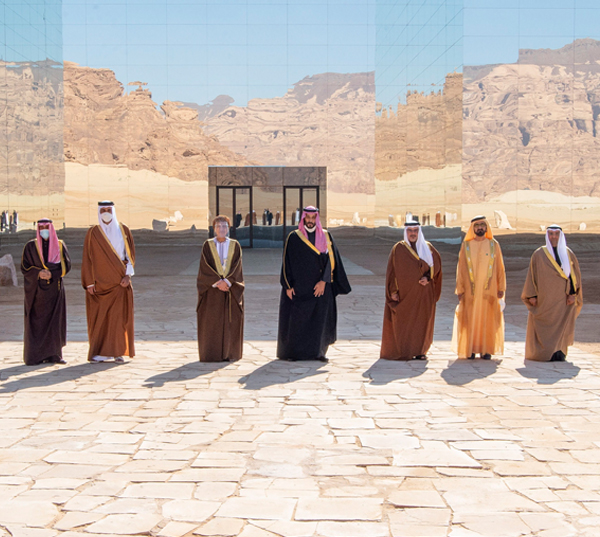
Features of Gulf Security in Light of a New Strategic Environment
The manifestations of the new geo-security field of the Gulf are reflected in the activity of its states over the Arabian Sea, the Mediterranean Sea, and the Red Sea, reflecting deep changes in the notions of geopolitics in relation to the vital and security interests of Gulf states. Therefore, this paper attempts to answer a basic question related to the new prospects and features of Gulf security in light of the new strategic environment, which links Gulf security to something broader.
.jpg)
Jordan's Role in Promoting Peace and Stability in the Region under the Leadership of His Majesty the King
This paper provides an overview of the most significant titles and stations of Jordan's role in promoting stability and building peace in the region under King Abdullah II's leadership. In addition, it examines the main features of the Jordanian situation in economic, political, and social terms, as well as its regional and international political activity, in light of the current situation and within the context of Jordan's geostrategic position and the nature of threats it faces. Furthermore, the paper predicts the possible and likely future of the active Jordanian role in shaping the features of the region, and the continued Jordanian activity in all directions and possibilities as an active actor playing its role to pursue stability in the region in where the doors to peace and development will open.
Advertising space title
Description of the advertising space. Upon the client’s initial approval of the design, this text will be removed.
.%D9%85%D9%86%D8%A7%D9%88%D8%B1%D8%A7%D8%AA-%D8%B0%D9%88-%D8%A7%D9%84%D9%81%D9%82%D8%A7%D8%B1.jpg)
Zulfiqar-1400 Drills: Operational Tactics and Political Messages
The following report provides an overview of the most notable operational aspects of the “Zulfiqar-1400” military drills carried out by the Iranian army. It also discusses the political messages conveyed by the drills at a time when Iran's diplomacy is preparing to resolve several issues, including the Vienna nuclear negotiations.
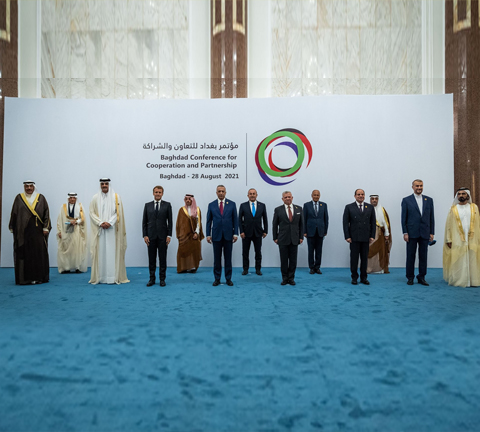
Saudi-Iranian Talks: A Step on a Long Road
Relations between Saudi Arabia and Iran continue to receive substantial attention given the impact of this event on the regional and international levels. In light of this, this paper attempts to read the talks from the viewpoint of possible incentives and variables and how they might affect hotbeds of tension and conflict in the region, as well as predicting their outcome.
.jpg-%D8%A7%D9%84%D8%A7%D9%84%D8%A9-%D9%88%D8%A7%D9%84%D8%A7%D9%86%D8%B3%D8%A7%D9%86.jpg)
Digitization of Humans or Humanization of Machine?
Between human creativity and innovation, and the speed and accuracy of machine, Hassan Ismaik tries to dispel human concerns about the development of machines that compete with man on equal terms in the economic, human, and production spheres. He also presents his vision of a complementary relationship between the innovative human and the assisting machine.
.jpg-%D8%A7%D8%A7%D9%84%D8%A7%D9%85%D8%A7%D8%B1%D8%A7%D8%AA-%D8%A7%D9%84%D8%B5%D9%8A%D9%86.jpg)
Why the UAE is worried about a “Cold War” between the United States and China
In this paper, Muhammad Barhouma provides an assessment of the reasons behind UAE’s concern about a “cold war” between the United States and China, as well as the context of such a war, how the UAE will interact with it, the potential impact on Emirati policies if the competition between the two superpowers intensifies, and the possible scenarios that will determine the UAE’s position on it.
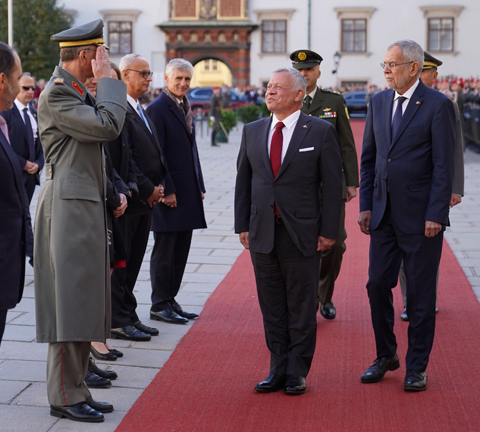
Jordan's Multifaceted Diplomacy Toward Europe
Europe is considered of great importance for the decision-makers in Jordan. Therefore, Jordan and the European countries have been involved in diplomatic interactions on many levels, the highest of which is King Abdullah’s meetings with European leaders. During the royal tour of Europe in October 2021, two unusual elements of Jordanian-European relations can be observed: 1- Diversification of Jordanian-European relations toward Central and Eastern Europe 2- Engagement in environmental diplomacy. The following report highlights these two elements from the standpoint of Jordan's higher interests.