





This opinion article is part of the series: Syria.. Transformations, Variables, and the Future of the State of Uncertainty
In recent years, the border has undergone a major transformation. The shifts within Syria—following the fall of the former regime and the rise of Hay’at Tahrir al-Sham to a position of authority—have produced a new reality in which multiple, ideologically divergent actors confront one another. This stands in stark contrast to the decades during which the border was relatively stable under the two Baathist regimes, up until 2003. Afterward, the area gradually fell within the orbit of Iranian influence, particularly after the eruption of the Syrian conflict in 2011. Although a degree of calm and fragile stability still prevails today, underlying tensions hint at the potential for sudden escalation, making the border a sensitive testing ground for the Middle East’s emerging geopolitical order.
A Critical Border and Deep-Rooted Fragility
The border’s fragility is often attributed to the conflicts that have shaped the new millennium. Yet its roots run much deeper, anchored in the Baathist era in both countries. During that period, government institutions played a significant role in loosening border controls as they sought to evade sanctions, especially throughout the 1990s and early 2000s. As Iraq’s economic crisis worsened and its international isolation grew, both the Iraqi and Syrian regimes tolerated, and in some cases sponsored, extensive smuggling networks. These networks engaged in large-scale illicit trade involving livestock, oil, electronics, tobacco, and fuel.
This state-enabled use of the border became a decisive factor in its long-term instability and in the evolution of smuggling operations. The Baathist governments provided the infrastructure, cross-border connections, and logistical support necessary for a sustained illicit economy. After the 2003 U.S. invasion of Iraq, the same infrastructure facilitated the movement of fighters and members of extremist organizations from Syria into Iraq. These groups spread rapidly across areas such as the Baghdad belt and Al-Anbar, and the border soon became a conduit for smuggling weapons and personnel. This continued when ISIS breached the line and linked territories in Syria and Iraq under what it called its “caliphate.”
Following the outbreak of the Syrian conflict and the tightening of sanctions against the Syrian regime, Damascus capitalized on the border’s fragility to secure its economic survival. This phase resembled the smuggling practices of the 1990s, but with one major difference: the illicit trade now centered on narcotics, particularly Captagon. Syria emerged as a regional hub for drug production, with manufacturing and smuggling routes expanding dramatically. The industry is estimated to be worth around one billion dollars, providing a vital financial lifeline that helped regime-aligned networks circumvent sanctions, fund militias, and maintain their grip on power.
This history paved the way for the rise of non-state actors operating across the border. However, the 2011 Syrian crisis—followed by Iran’s intervention and the deployment of its proxies in 2012—deepened the border’s vulnerability. Non-state groups were no longer merely active on both sides; they came to dominate key nodes and strategic areas along the frontier.
Critical Nodes and Strategic Areas
With the outbreak of the Syrian conflict in 2011 and Iran’s direct and intensive intervention, the landscape of the Syrian-Iraqi border shifted, along with the functions it served. As Iran expanded its influence in Syria and turned Syrian geography into a central hub for military and logistical supply routes to Hezbollah in Lebanon, Tehran intensified the movement and smuggling of weapons from Iraq into Syria and onward to Lebanon. The same applied to its proxies, who, from the early days of the Syrian crisis, began operating across borders as Hezbollah and various Iraqi armed factions joined the fighting in Syria.
At this scale, cross-border activity acquired a strategic geopolitical dimension. It was no longer limited to smuggling weapons or personnel; the border became a central segment of Iran’s strategic land corridor, which provided a reliable supply line for Iranian military and financial assets across Iraq, Syria, and even Lebanon, directly supporting proxies such as Hezbollah.
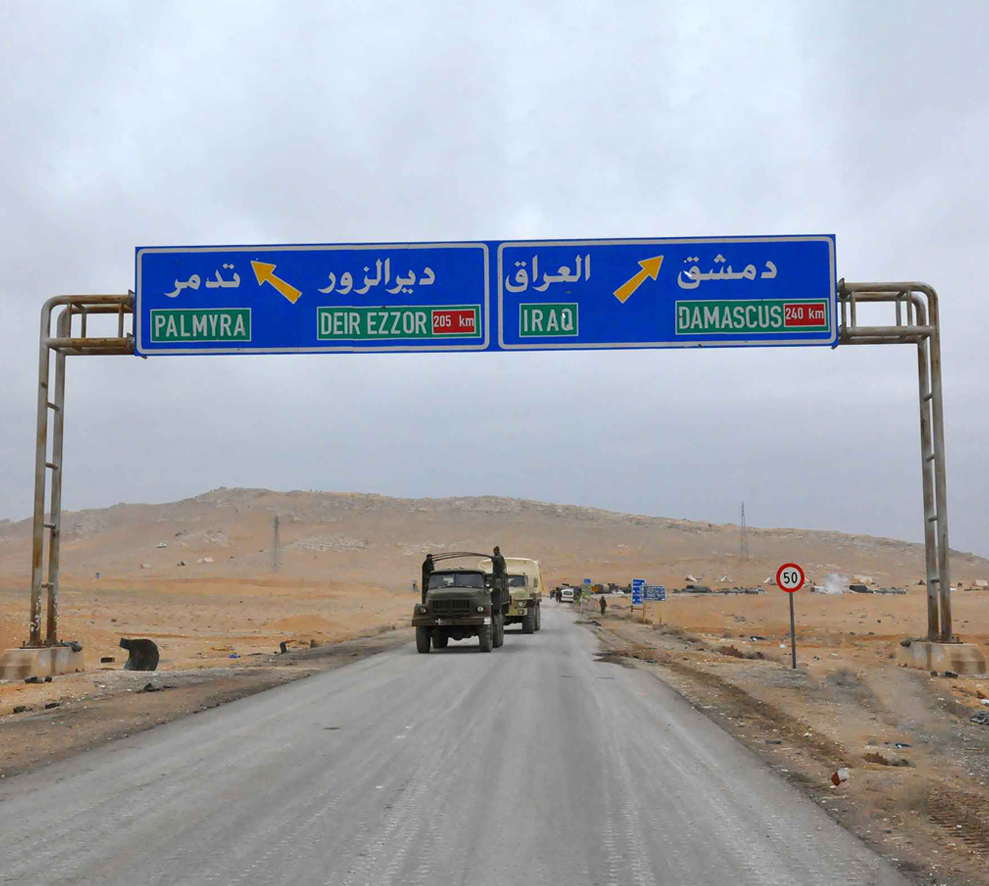
This corridor underwent several shifts. Initially, it consisted of three main routes: A northern route connecting northern Iraq to northern Syria via the Rabia crossing between Nineveh and Hasakah provinces, before the United States disrupted it by deploying forces in northeastern Syria. A southern route from southern Iraq into southern Syria through the Al-Tanf crossing, which was similarly blocked when the U.S. established the Al-Tanf Garrison in 2014. The corridor ultimately consolidated around the central route through the Al-Qaim/Al-Bukamal crossing, located along the main highway linking Damascus and Baghdad.
Iraqi factions backed by Iran played a pivotal role in securing this corridor. They reinforced their presence significantly in northwestern Iraq, moving their units into key positions such as Tal Afar Airport—located in a strategic town on the road from Mosul to Sinjar. From there, the supply route extended through the southern slopes of Mount Sinjar into Syria, heading toward the cities of Deir ez-Zor and Al-Mayadin.
The Border Situation After the Change of Regime
The change in the Syrian regime ushered in a period of uncertainty, as Iraqi security concerns grew over the emerging vacuum in eastern Syria and the burden of having to secure the border unilaterally. These concerns intensified with the rise of Hay’at Tahrir al-Sham to power, especially given that its leader had previously been active in Iraq within the ranks of Al-Qaeda and ISIS—evoking memories of 2014, when ISIS captured vast territories across both countries until 2018.
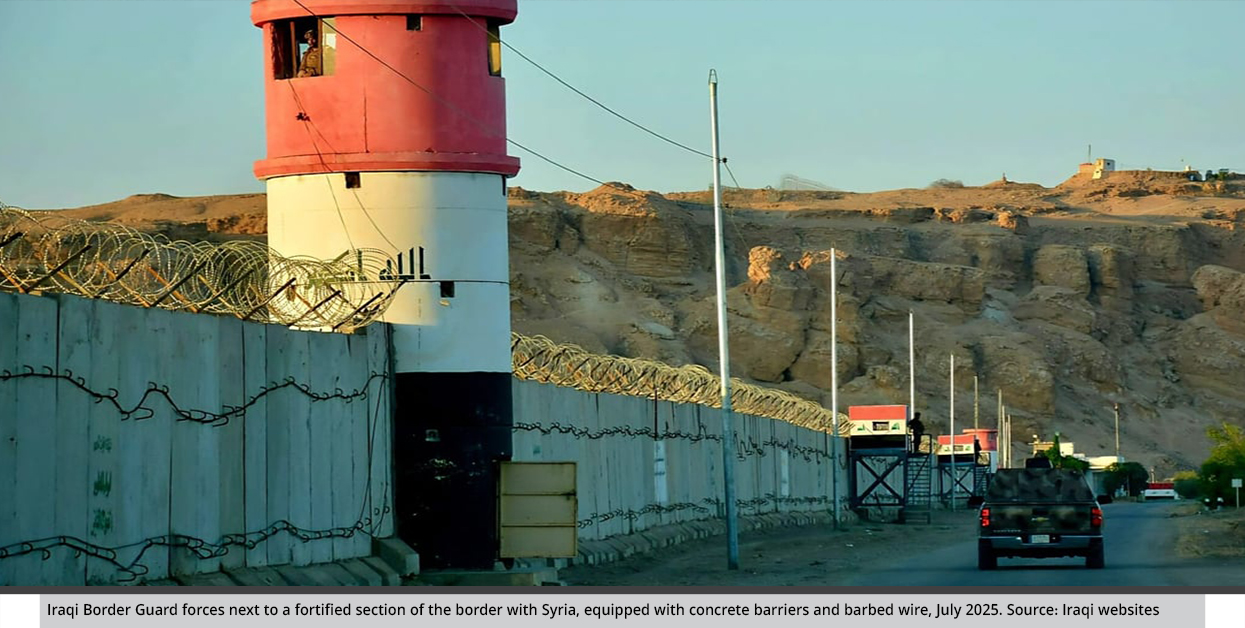
This shift therefore became a source of anxiety for Iraqi leaders, particularly among Shia political forces, prompting Baghdad to prioritize internal security considerations in its response to developments in Syria. In late November 2024, the government increased the deployment of Iraqi army units along the border and accelerated construction of the 400-kilometer concrete barrier, which was completed in June 2025. In its approach to the interim authorities in Damascus, Baghdad quickly adopted a proactive security posture. This was reflected in high-level Iraqi security delegations visiting Damascus, beginning with the visit of Hamid Al-Shatri, head of Iraqi intelligence, who met Ahmed Shar’a on 26 December 2024, followed by another visit on 25 April 2025. These meetings focused primarily on border security and counterterrorism cooperation.
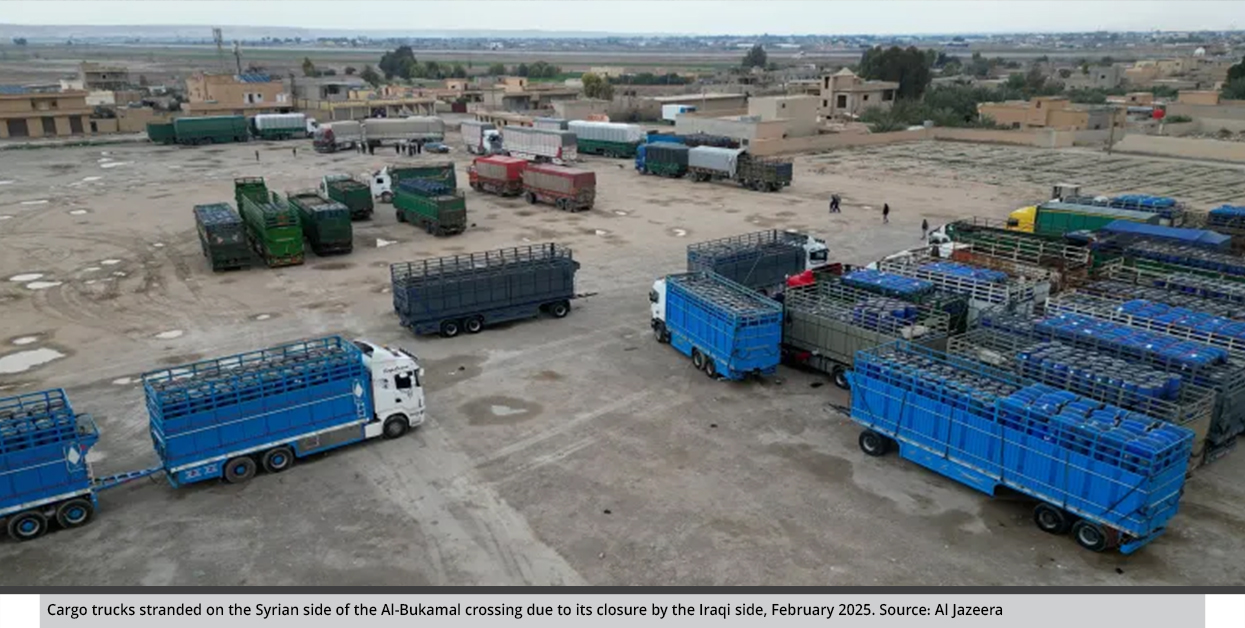
Nevertheless, the border witnessed several developments following the regime change. After the closure of the Al-Qaim/Al-Bukamal crossing in late December 2024, it was reopened in mid-June 2025. The immediate objectives were humanitarian—facilitating the return of Iraqis stranded in Syria and enabling Syrian refugees to re-enter Iraq—and then economic, given the critical role of the border in sustaining commercial flows essential to local markets in both countries. The reopening had been delayed since Baghdad first announced its intention in January 2025, pending assurance that the Syrian transitional government could effectively manage the crossing.
Dynamics of Control and Actors’ Strategies
The Syrian-Iraqi border is currently divided into separate zones of control, shared among five actors with conflicting objectives and overlapping agendas. The official actors consist of the Syrian interim government and the Iraqi government, alongside two non-state actors—the Iraqi armed factions and the Syrian Democratic Forces (SDF)—in addition to an active U.S. military presence.
On the side of official actors, the Syrian interim government faces a complex internal task: consolidating its domestic legitimacy and central authority. The border is directly linked to its authority and its control over resources, including customs and tax revenues, which requires transforming border crossings into engines of economic growth, while simultaneously demonstrating sovereignty over the entirety of Syrian territory. Moreover, the border is tied to the government’s capacity to prove its regional competence by enforcing control and limiting cross-border trafficking in narcotics and weapons. Syrian security forces and the army have carried out operations against drug smuggling, raiding production sites and seizing large quantities. Nevertheless, the interim government faces intricate challenges, as its effective control over the full Iraqi border remains limited. While it controls the central Al-Qaim/Al-Bukamal sector, northeastern areas remain entirely outside its authority, and long-standing smuggling networks continue to undermine prospects for achieving full security even in the areas it administers.
Iraq, in contrast, is focused on the security dimension of countering ISIS. Despite the organization’s defeat, its threat persists, especially after it regained part of its activity in Syria following the regime change, exploiting the security vacuum and its previous ties to members and leaders of Hay’at Tahrir al-Sham. At the same time, Baghdad is attempting to balance its security concerns with U.S. pressure to refrain from approving the Popular Mobilization Forces (PMF) law, to impose sanctions on factions within the PMF, and to dissolve certain units. With PMF units deployed at various points along the border, Baghdad fears the repercussions of any U.S. decisions or actions on border security.
Additionally, several Iraqi armed factions operate in parts of the border region. Reports indicate that these factions continue to attempt to use illicit crossings to smuggle weapons and personnel into Syria on behalf of Iran. According to press reports quoting Syrian officials, Damascus has deployed roughly 3,000 soldiers along the border to deter infiltration attempts from Iraq, particularly following Israel’s military operations targeting Iranian assets in June 2025. This deployment also serves Iraqi interests by maintaining communication channels that help prevent any escalation or suspicious movements on either side of the border.
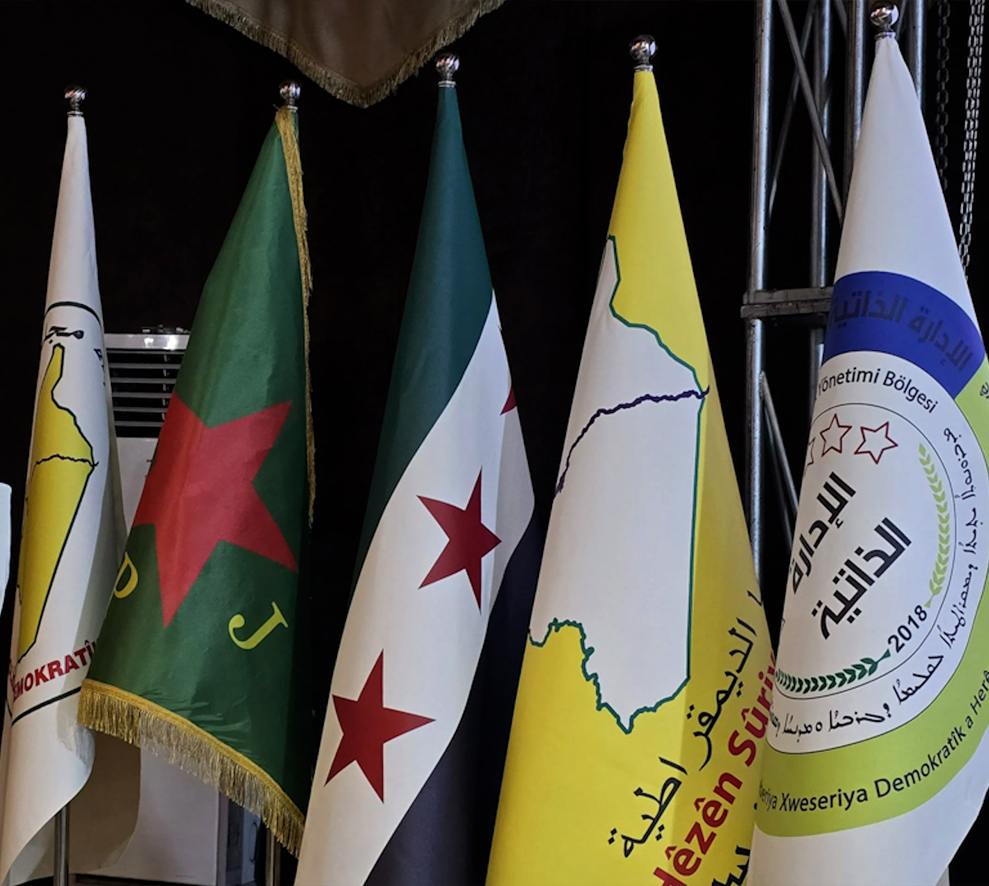
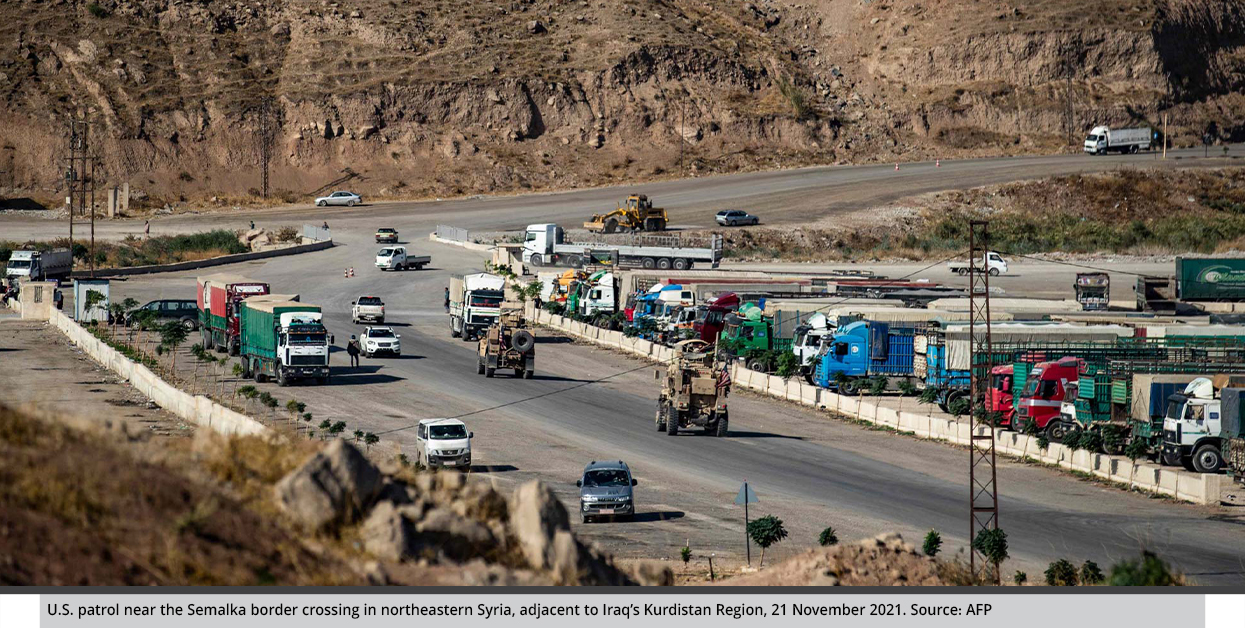
Meanwhile, the Syrian Democratic Forces (SDF) control the far northern section of the border on the Syrian side, administering the Semalka/Fishkhabour crossing located in northeastern Rojava, which is managed by the Kurdistan Regional Government on the Iraqi side. On 10 March 2025, the SDF reached a preliminary agreement—backed by the United States—with the Syrian interim government to integrate civil and military institutions, including border crossings and oil fields. However, the SDF continues to maintain control of the crossing, which remains the only gateway connecting the Autonomous Administration’s territories to the outside world.
The future administration of the Semalka crossing is tied to the trajectory of negotiations between the interim government and the SDF. Should these negotiations collapse, the northern section of the Syrian-Iraqi border would remain permanently outside the government’s control, preserving its functions as a humanitarian and economic corridor, and continuing to serve as a vital supply route for the resources and goods required by the Autonomous Administration in its areas of influence.
The Geopolitical Scene on Both Sides of the Border
Both the Iraqi and Syrian sides have demonstrated an ability to manage the border effectively. Baghdad has adopted a pragmatic policy focused on overcoming its concerns and reservations regarding the origins and background of the Syrian Interim Government, choosing instead to prioritize security considerations — particularly preventing ISIS from exploiting the vacuum on the Syrian side to expand its activity along the border and in adjacent areas. It has also worked to prevent Iran-backed armed factions from maintaining their operations on both sides of the border, similar to the situation that existed before the change of regime.
However, the emerging situation along the border today is likely to form one of the most significant future geopolitical flashpoints in the region. The deployment of the Syrian army — whose core is made up of Hay’at Tahrir al-Sham (HTS) — along the border, facing the Popular Mobilization Forces (PMF) on the Iraqi side, even if only in a limited manner given the Iraqi army’s reinforced presence, means that security and stability at the border remain subject to the deep ideological divergence between both sides — a divergence that is prone to tension and possible escalation with any change or influencing factor.
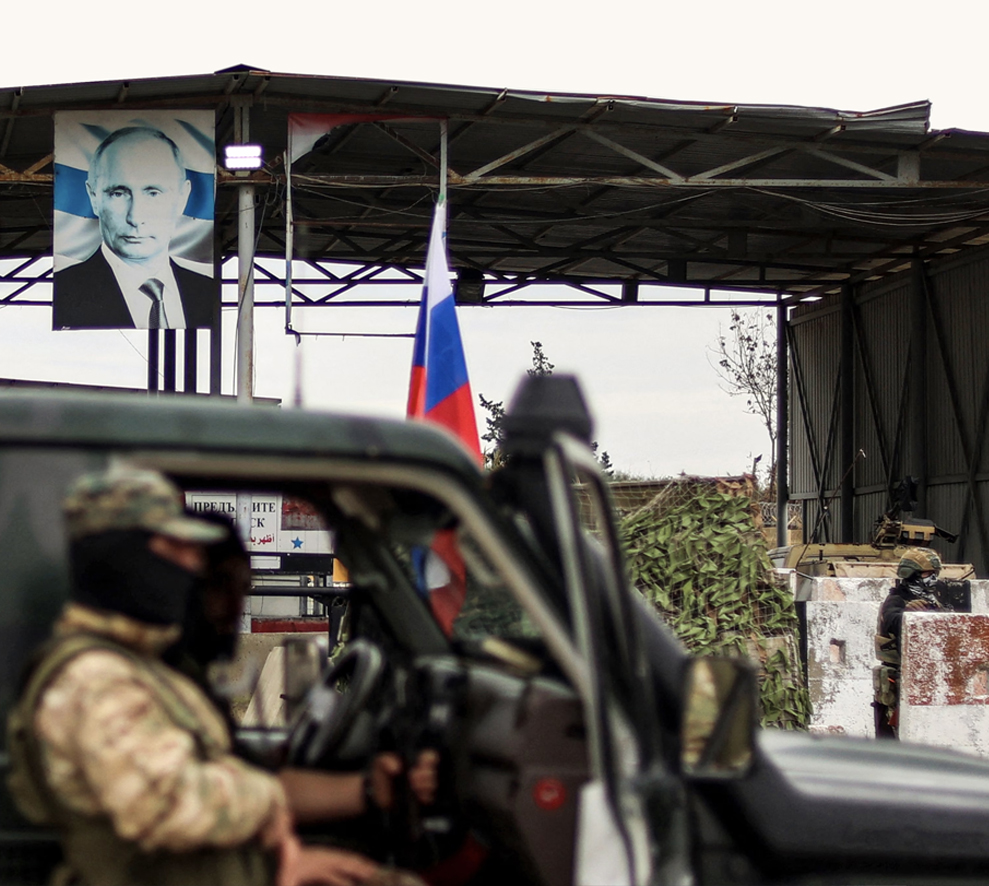
On one hand, Jabhat al-Nusra, which later evolved into Hay’at Tahrir al-Sham, was initially established with the primary aim of fighting the former Syrian army and its Iranian supporters and proxies. It remains doubtful that the group’s rise to power would change its foundational references, extremist ideology, or the reasons for its formation — even as the government seeks to project an unprecedented degree of regional and international openness, especially toward Israel, with which it is expected to sign a security agreement soon, and toward Russia, which played a major role — primarily through airstrikes — in the former regime’s military campaign against the armed opposition, including HTS. President Ahmed Al-Shar’a’s visit to Moscow, where he met Russian President Vladimir Putin on 15 October 2025, reflected this shift.
Still, the Interim Government continues to adopt an adversarial stance toward Iran and its proxies, regarding them as its primary enemy and blaming them for what it describes as the internal rebellion along the coast — particularly Hezbollah’s role in the events of 6–10 March 2025.
On the other hand, the Popular Mobilization Forces (PMF) were formed in response to the rise of ISIS and its control over large swathes of Iraqi territory, following a religious edict issued by cleric Ali al-Sistani on 13 June 2014. The new authority in Syria is tied — in terms of context — to the very circumstances that prompted this edict, particularly since Al-Shar’a himself had been previously detained in four Iraqi prisons, including Abu Ghraib and the American-run Camp Bucca, as a member of Al-Qaeda before moving to Syria to establish the group’s branch there under instructions from Abu Bakr Al-Baghdadi. Although he has publicly announced his break with that background, it remains present in the Iraqi collective mindset.
And while the PMF abided by the Iraqi government’s decision not to intervene in the clashes that preceded the regime change in Syria, Iraq — according to PMF leader Faleh Al-Fayyad — “cannot turn a blind eye when terrorist groups take control of Syria.”
Accordingly, the Syrian-Iraqi border is poised for long-term tensions that may escalate into conflict depending on the shifting domestic conditions of both states or wider regional dynamics. In the near- and medium-term, it represents the most likely arena for indirect confrontation between Iran and the United States and their respective partners — driven by Iran’s need to generate instability that could help restore the influence it lost after the war in Gaza, and by Washington’s increasingly strict measures aimed at containing Iran’s proxies across the region, especially in Iraq.
In conclusion, the Syrian-Iraqi border has entered a new phase marked by strategic competition and ideological contradiction. Its significance now goes well beyond that of a mere bilateral border; it has effectively become a new geopolitical hotspot within the region’s future landscape. Maintaining its current calm and stability remains a localized and temporary condition, while its susceptibility to tension — and possibly escalation — in response to domestic shifts in both countries or regional and international transformations remains highly probable.
Keep in touch
In-depth analyses delivered weekly.

Related Analyses: