Publications

International and Global Trends
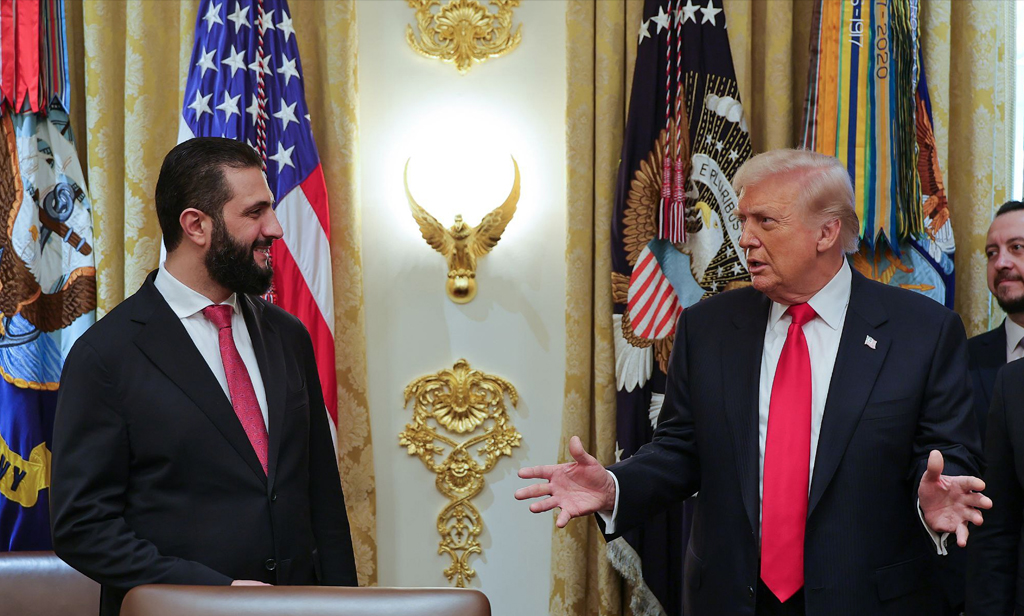
Real clear world: A former terrorist inside the white house
This article examines the unprecedented decision to welcome a former jihadist—long designated as a terrorist by the United States—into the White House. It traces his trajectory from al-Qaeda operative to interim president of Syria, raising urgent questions about a dramatic shift in U.S. foreign policy. The piece challenges readers to consider the consequences of legitimizing a figure whose past is inseparable from decades of extremist violence.

Countering Terrorism and Extremism
Sudan: The Country Hijacked by Islamists and Targeted for Burial by Iran
International and Global Trends
The Gaza War and the Military Deployments in the Region of the World’s Great Powers
The Palestinian–Israeli Conflict
Position Assessment: Potential Pathways of Conflict between Hamas and Israel
Emerging Threats and Non-Traditional Security
Asymmetric Threats:A Study in the Transformations of Traditional Deterrence Strategies
International and Global Trends
The Ukrainian Crisis And Its Repercussions On The Transformation Of Chechen Fighters From "Salafi-Jihadism" To "Sufism Jihadism"
Filter by:

Why Terrorism Has Expanded Into The Jungles Of Africa
This report provides an overview of the development of informal armed groups in Africa, going through the most important factors that make the African continent a quasi-safe haven for the expansion of international terrorism after ISIS retrogression in the Middle East; for Africa is crucial to the global security considerations despite the fact that security studies in this regard are relatively few.

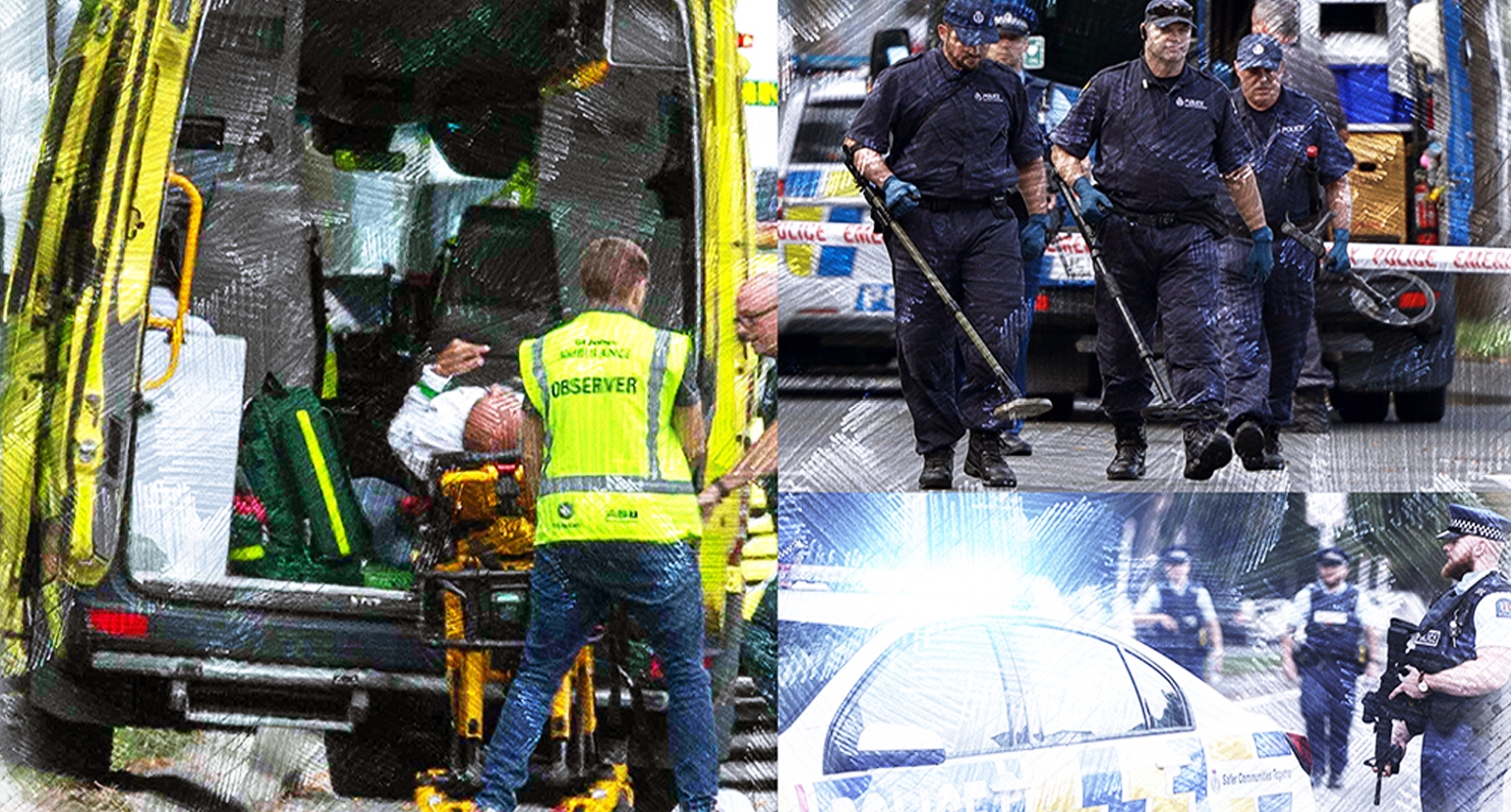
New Zealand Attack: A Manifestation of Transnational Terrorism
This paper examines the roots of the extremist ideology that influenced Brenton Tarrant, perpetrator of New Zealand's attack; it explores a comprehensive context that reveals political and social contradictions within Europe that encourage more violent extremism, which this attack manifests. The paper summarizes "The Great Replacement" manifesto posted by the terrorist on a social media platform prior to carrying out his attack. By adopting this terrorist plot as a case study, the paper addresses interactions between the attacker and the right-wing, discussing accuracy in classifying this operation as "lone wolf terrorism." Finally, the paper offers recommendations to contain this growing type of terrorism as part of international efforts to combat multi-faceted terrorism; these multiple facets nourish one another and attract more supporters that are influenced by ideological-based attacks, whose perpetrators become role models for extremists with various motives.