Analyses
Politics
test promoted
Politics
Real clear world: A former terrorist inside the white house
Politics
The Syrian Unity Predicament: Files of Sovereignty, Security, and the Kurdish Issue
Palestinian-Israeli conflict
Trump’s Plan: Second Phase Scenarios
Politics
Will the Shifting Orientations of Iraqi Voters Decide the Upcoming Elections?
Filter by:
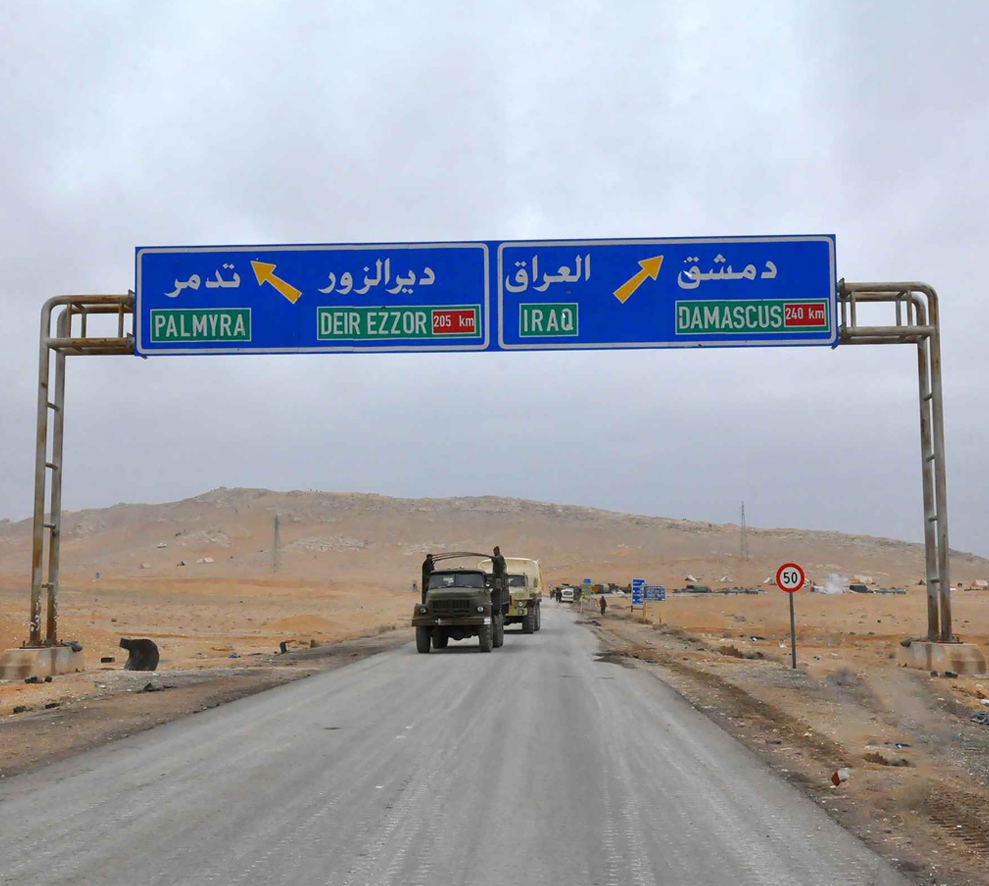
The Syrian-Iraqi Border: Reshaping the Geopolitical Space of the Middle East
The Syrian-Iraqi border is entering a new phase marked by strategic competition and sharp ideological divergence. Its significance now extends far beyond a simple bilateral boundary, turning it into a geopolitical flashpoint that may shape the region’s future landscape. Despite a period of relative calm, the stability along the border remains fragile and temporary, while the likelihood of tension or escalation—driven by domestic developments in both countries or by broader regional and international shifts—remains conspicuously high.
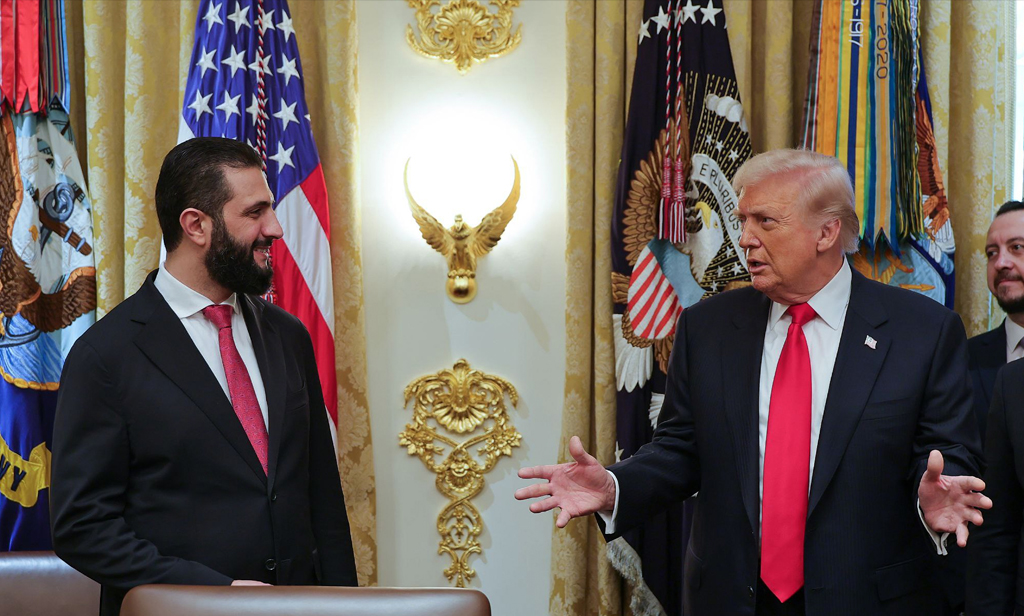
Real clear world: A former terrorist inside the white house
This article examines the unprecedented decision to welcome a former jihadist—long designated as a terrorist by the United States—into the White House. It traces his trajectory from al-Qaeda operative to interim president of Syria, raising urgent questions about a dramatic shift in U.S. foreign policy. The piece challenges readers to consider the consequences of legitimizing a figure whose past is inseparable from decades of extremist violence.
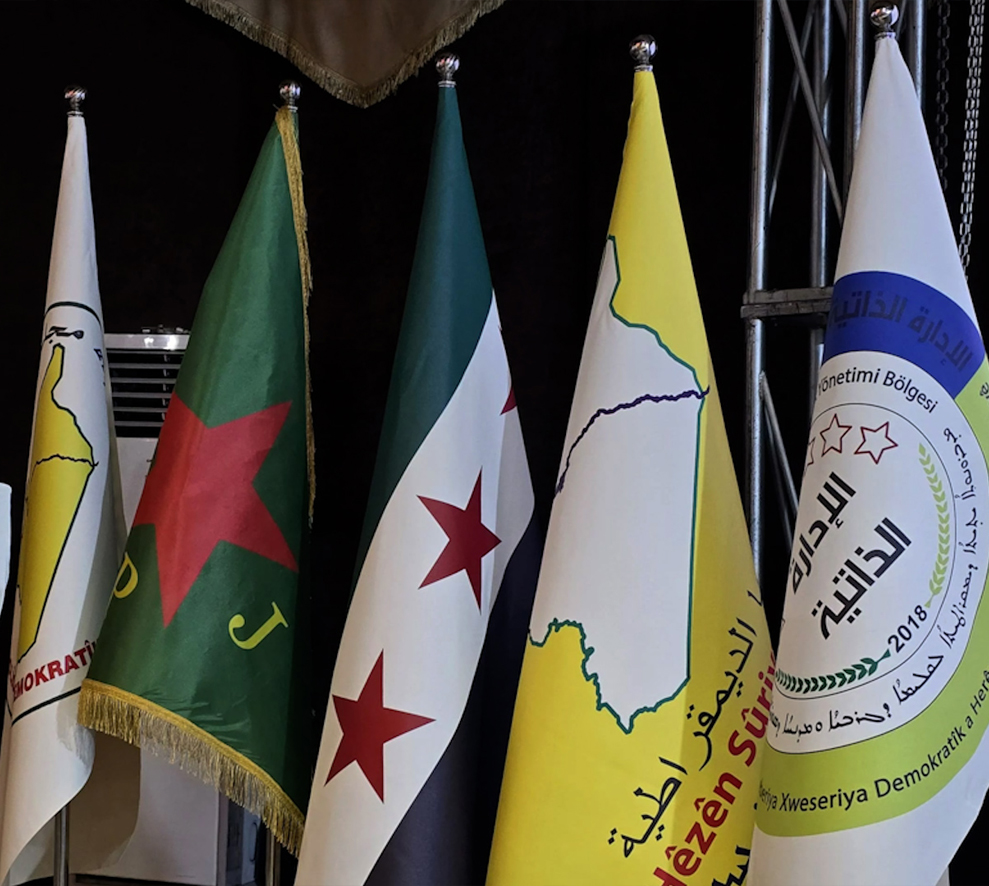
The Syrian Unity Predicament: Files of Sovereignty, Security, and the Kurdish Issue
The transfer of power in Syria in 2024 did not achieve the desired reconciliation, as the conflict between the interim government and the Syrian Democratic Forces undermined the March 10 agreement and deepened the division over the form of the state between centralization and decentralization. The ambiguity in the agreement and the regional and international interventions, especially from Türkiye, the United States, France, Russia, and Israel, have also contributed to complicating the scene and preventing a stable settlement, which makes the future of Syria linked to the government’s ability to establish a comprehensive and binding social contract that ensures the participation of all components.
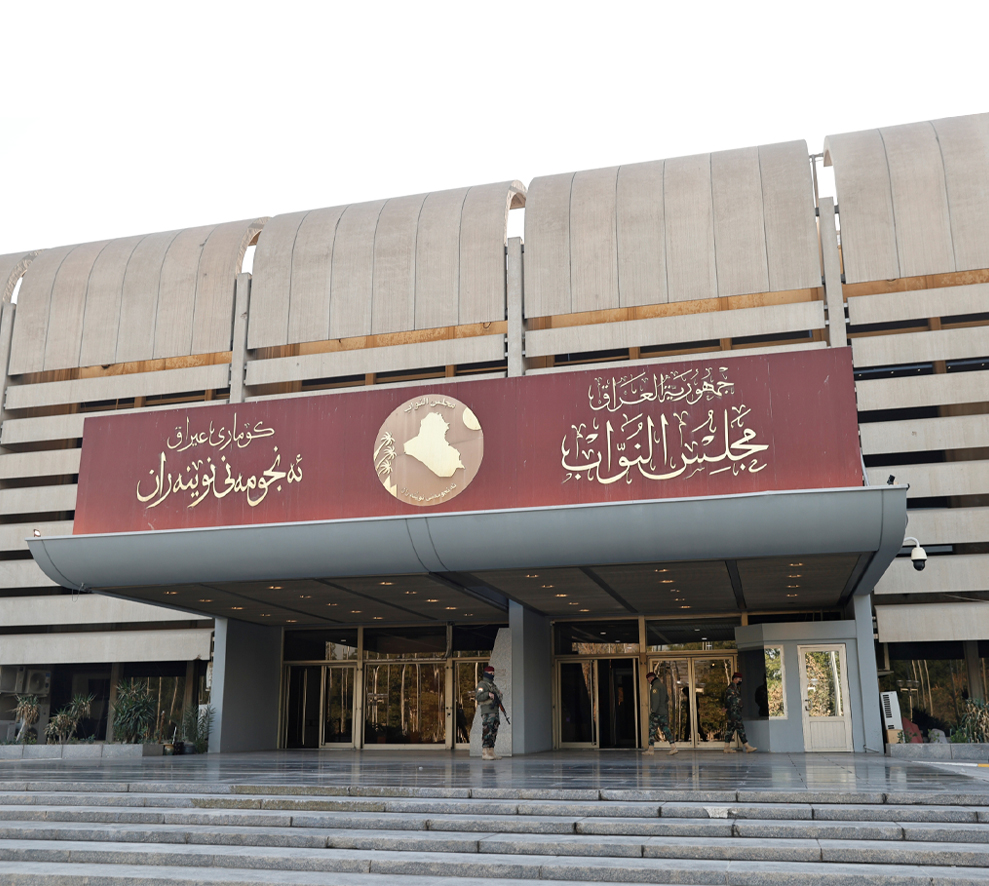
Will the Shifting Orientations of Iraqi Voters Decide the Upcoming Elections?
As the parliamentary elections draw near, electoral campaigns must be built upon the tangible progress already achieved and address the aspirations of an Iraqi society that has indeed changed—a society no longer willing to tolerate policies of denial or procrastination.
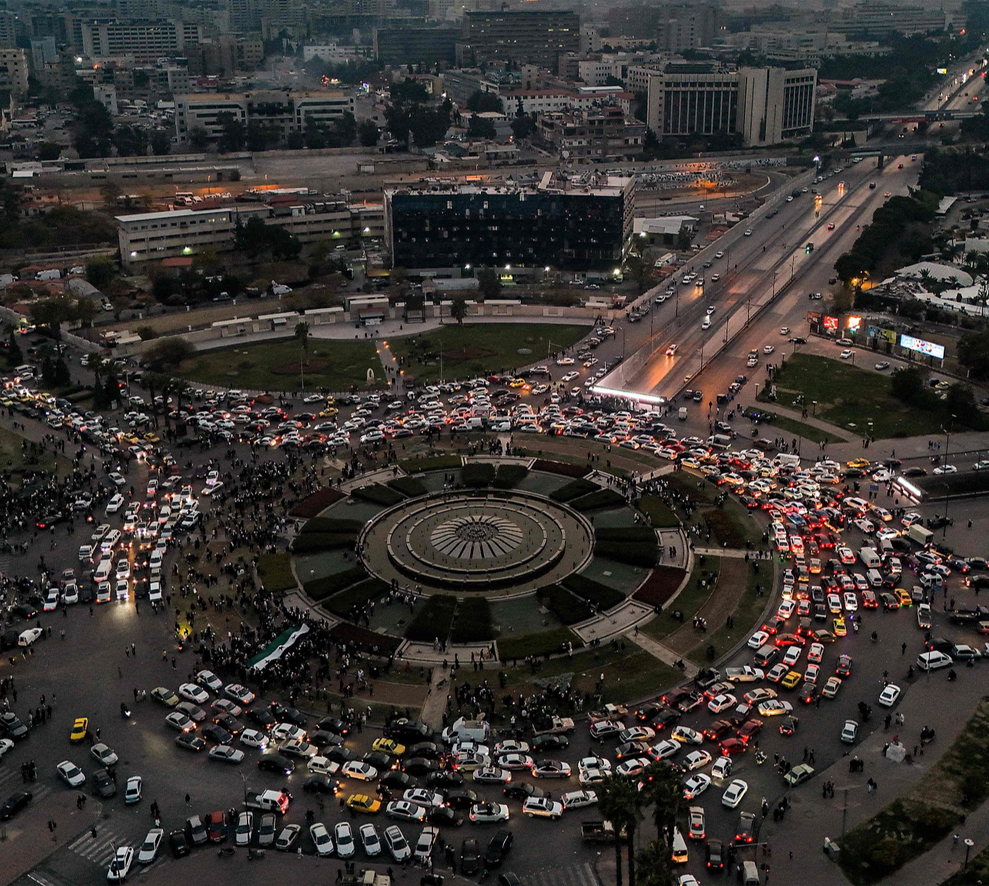
The Syrian Situation Between Centralization and Decentralization Options
The issue of centralization versus decentralization in Syria is a structural one that goes beyond intellectual debate, touching on the very essence of state reconstruction, the definition of national identity, and the form of governance. While centralization is viewed by some as a safeguard for the country’s unity, experience has shown that it has deepened marginalization and weakened political participation. Conversely, many political segments see decentralization as an entry point for comprehensive institutional reform; however, hastily adopting it could threaten stability and sovereignty, especially given the complexities of the Syrian reality.
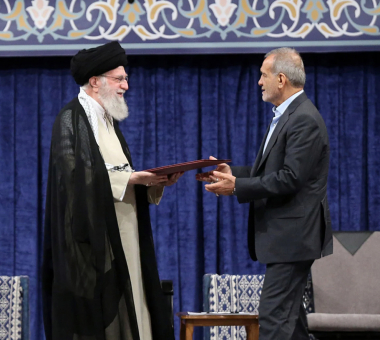
Will the Presidency of Masoud Pezeshkian Change Iran’s Domestic and Foreign Policies?
The Iranian president’s ability to implement new programs is limited considering the failed efforts of the three previous reformist presidents. None of them managed to bring about significant changes in Iran’s domestic and foreign policies. Moreover, it is likely that Pezeshkian agenda will face strong opposition from the conservatives who dominate the parliament and the Assembly of Experts after their victory in the March 2024 elections.
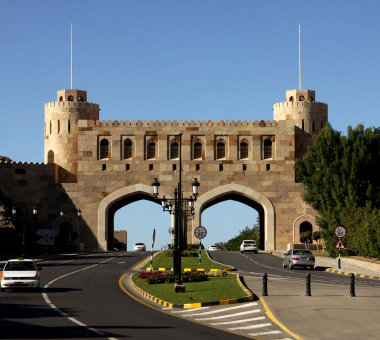
Wadi al-Kabir Attack: The Event Indicators and the Symbolism of Place
This position assessment addresses the terrorist attack on a mosque in the capital city of Muscat in the Wadi al-Kabir region, covering the implications related to the choice of location and its symbolism, the perpetrators’ identities, their motives, and the future repercussions of the attack.
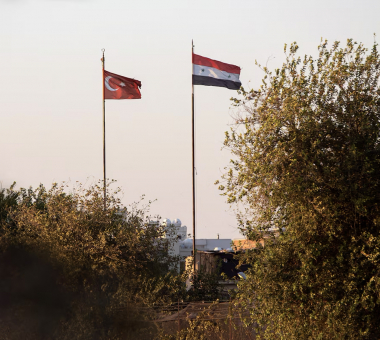
Turkey and Syria Inching Closer Toward Resuming Good Relations
Turkish-Syrian relations have entered a fresh phase of discussion initiatives, but the path of rapprochement between them is not new. Its manifestations have been apparent since 2022. But now the resumption of relations between the two counties has become a significant objective for Russia.